Budget Speculation and Inflation Concerns
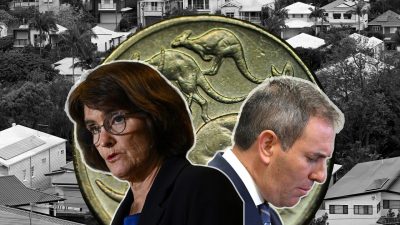
As the Australian budget approaches, there has been growing speculation about potential financial support for taxpayers. Reports suggest that every individual who earns a salary and pays tax could receive an earned income offset of between $200 and $300. However, the treasurer, Jim Chalmers, has downplayed these claims, emphasizing that the upcoming fiscal blueprint will focus on addressing inflation.
Chalmers acknowledged the ongoing discussions surrounding the budget but stated that he would not confirm or deny specific measures at this time. “There’s always a lot of speculation about budget measures in the weeks leading up to budgets,” he said during a press conference in Canberra. “That speculation is not always right, and I don’t intend to add to that specific speculation today, except to say that we are already cutting taxes.”

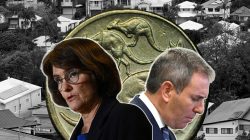
Despite this, the Reserve Bank has raised concerns about potential government handouts. Governor Michele Bullock warned that additional spending could complicate efforts to bring inflation under control. “When inflation is already too high and the economy facing capacity pressures, it doesn’t take much additional spending to make the job of returning inflation to target more challenging,” she said during a media event in Sydney.
Bullock highlighted the importance of managing demand in the current economic climate. “The extent to which government make up the shortfalls for households by giving them more money, it makes it harder to dampen demand. When governments are spending a lot of money and we’re running up against capacity constraints, then they do need to think about whether or not there’s ways they can help the inflation problem by looking for ways to constrain demand.”
Government’s Approach to Tax Relief
Prime Minister Anthony Albanese has not confirmed any specific Treasury advice regarding the impact of potential tax relief on inflation. However, he emphasized the government’s commitment to responsible budgeting. “What I can guarantee is that certainly, we’re very conscious about putting that downward pressure,” he told reporters in Brisbane. “We’ve already had $114 billion of savings in our budgets. There’ll be more savings in the budget that is announced next week – this will be a responsible budget.”
Chalmers also did not confirm whether changes to negative gearing, capital gains tax, and taxes on trust funds would be included in the budget. These measures were part of Labor’s platform during the 2019 election but have since been shelved. Chalmers stressed that the budget would not be a rehash of past policies. “My job is to make the right decisions for the right reasons in 2026, not to rerun the election of 2019,” he said. “My job is to look forward, not back.”
Opposition Leader Angus Taylor criticized the government, calling it incompetent and accusing it of misleading Australians about its tax policies. “What Australians want to see is lower inflation and lower interest rates,” he said. “I’ve been saying for years that this government just keeps putting a band-aid on the bullet wound.”
New Measures for Electric Vehicles
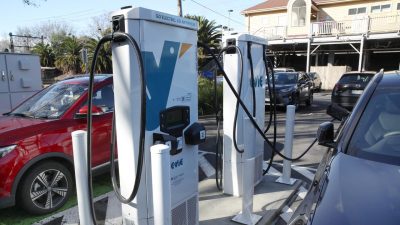
In addition to the budget-related discussions, the treasurer and Energy Minister Chris Bowen announced new measures to support electric vehicle (EV) adoption. Employers will now be able to avoid paying fringe benefits tax on EVs purchased through a novated lease, provided the vehicle costs under $91,387.
This initiative will transition to a permanent 25 per cent discount on fringe benefits tax for such vehicles. From April 2027, the full tax discount will only apply to EVs costing $75,000 or less. Vehicles priced above $75,000 but below the luxury tax threshold will receive a 25 per cent discount instead.
During the same period, all EVs below the luxury tax threshold will only receive the 25 per cent discount. The luxury tax threshold is currently set at $91,387, but it increases annually with inflation.