
Strait of Hormuz: Iran’s “Toll Booth” and the Global Shipping Squeeze
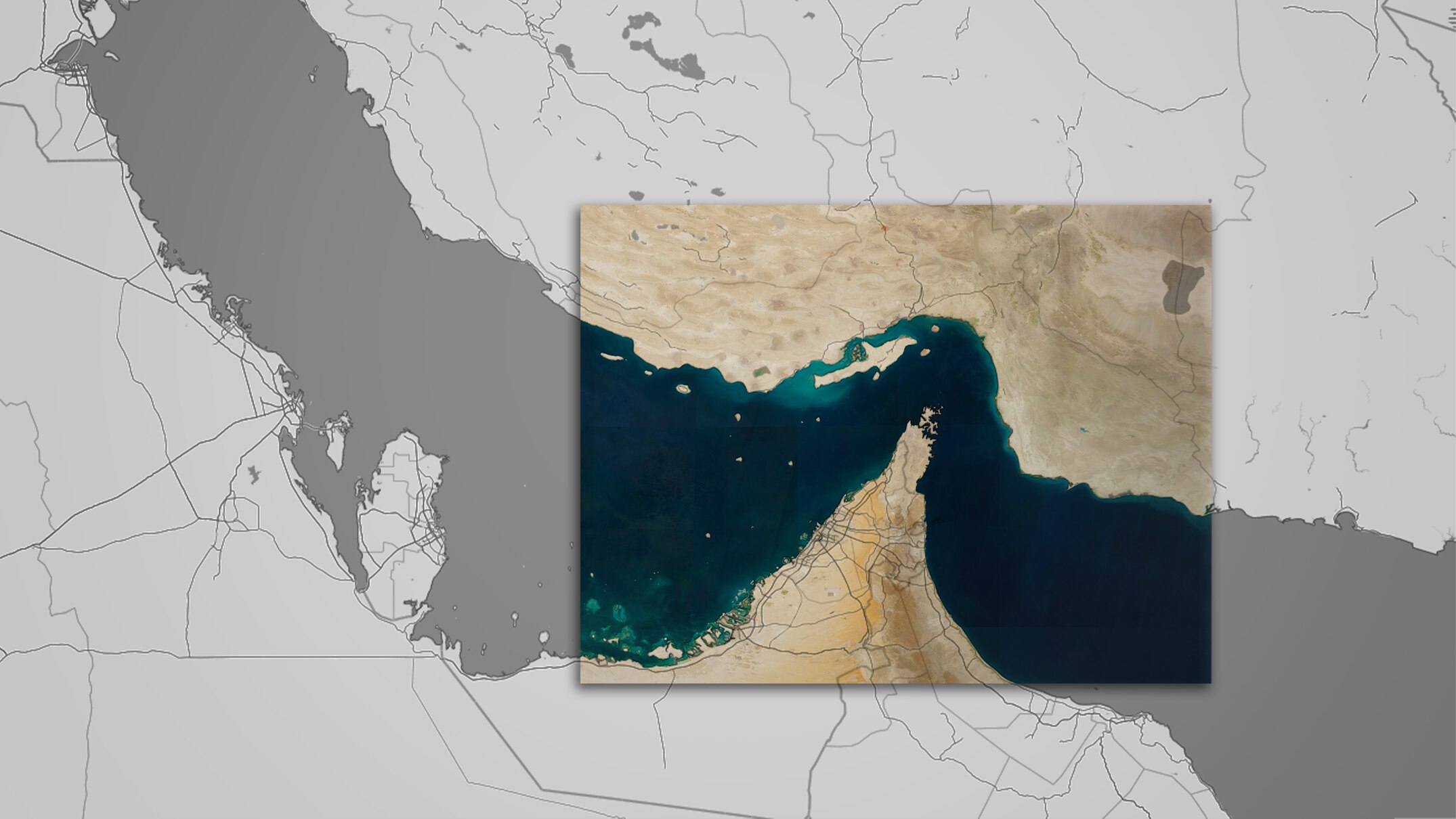
The Strait of Hormuz, a vital artery for global energy supplies, has become a critical point of contention, with Iran effectively operating it as a “toll booth.” Since the onset of hostilities involving the United States and Israel, Iran has reportedly leveraged its control over this narrow waterway, potentially generating hundreds of millions of dollars in additional revenue from its own oil exports.
Maritime tracking data reveals a dramatic decline in daily traffic through the Strait of Hormuz, plummeting by approximately 95 per cent since February 28th. This sharp decrease is attributed to the escalating threat of attacks on vessels navigating the Persian Gulf. However, a selective approach by Iran has emerged, allowing ships aligned with its interests, including its own tankers, to pass through, a manoeuvre described as a “selective closure” of the crucial elbow-shaped waterway. Meanwhile, other vessels are taking significant risks to transit.

Analysis of available marine tracking data and satellite imagery indicates that only about five to six large vessels – encompassing tankers, bulk carriers, and container ships – are now moving daily through the strait. This starkly contrasts with pre-war figures.
“A comment that’s got some in the US government mad at me is that the Iranians have control of the strait,” commented Sal Mercogliano, a former merchant mariner and marine historian. “They’re running it like a toll booth.”
The shift in control became evident when the Pakistan-owned vessel Karachi, an oil tanker not subject to sanctions, transited the Strait of Hormuz on March 15th, broadcasting its tracking location. Its trajectory showed it hugging the Iranian coast, deviating from the more conventional shipping lane that typically runs through Omani waters. Analysts interpret this as a clear indication that Iran has established a new shipping corridor, deliberately directing vessels into Iranian waters for passage verification.
“They’re coordinating with the Iranians for passage out, but to verify, they’re going up there… they’re passing by, and they’re getting positively identified,” Dr Mercogliano explained. “About a dozen of them now have done that.”
Adding to this assertion of control, Iran’s Islamic Revolutionary Guard Corps (IRGC) is reportedly imposing a de facto “toll booth” regime. Maritime data company Lloyd’s List has reported that at least two ships have paid for passage. Furthermore, Iran is reportedly drafting new legislation to formalise this process, with plans expected to be finalised imminently, according to Iranian state media. A senior Iranian parliamentary official, Alaeddin Boroujerdi, stated to state media that “Iran charges $2 million from each ship as a transit fee,” adding that “after 47 years, there is a new, de facto sovereign regime in the Strait of Hormuz.”
Economic Repercussions and Shifting Trade Routes
While global economic and supply chains grapple with the pressure created by Iran’s effective blockade, the Iranian regime itself appears to be profiting. Crude oil exports from Iran have remained relatively unhindered by the ongoing conflict. Maritime intelligence firm TankerTrackers estimates that Iran has been moving an average of 1.6 million barrels of oil per day between March 1st and March 23rd. The surge in oil prices since the war’s commencement, coupled with the US decision to ease sanctions on Iranian oil to bolster global supply, has significantly boosted revenue for the Iranian regime.
This situation presents a stark contrast for nations heavily reliant on oil and gas imports from the Persian Gulf. Governments worldwide are scrambling to address shortages and soaring energy prices. Some of the most affected nations are pursuing diplomatic avenues directly with Tehran to secure passage. However, even countries with established diplomatic ties are not assured of safe transit through this critical chokepoint.
Vessels Navigating the Strait of Hormuz
Prior to the conflict’s initiation on February 28th, an average of approximately 138 vessels transited the Strait of Hormuz daily, responsible for carrying one-fifth of the world’s oil and gas. However, analysis of data by the ABC indicates that only around 150 ships, including approximately 46 oil tankers, have passed through the strait between March 1st and March 26th. This represents a significant drop from the pre-war average of about 50 oil tankers per day.
Interestingly, more than one-fifth of the vessels making the crossing are Iranian-owned. However, the data provides an incomplete picture, as many Iranian vessels operate without broadcasting their locations. Among the other ships that have transited in recent weeks, many are owned by companies registered in Greece, China, India, the United Arab Emirates, and the Marshall Islands. Some of these passages were reportedly facilitated, while others involved ships taking a gamble on navigating the strait.
Greece accounts for the second-highest number of ships crossing the waterway. Industry sources suggest this is partly due to the calculated approach adopted by some Greek ship owners. Dr Mercogliano noted that the disruption to traffic through the strait has driven up shipping costs, to the advantage of certain companies. “When you have a charter that’s paying 10 times the normal value, you’re going to pay your crew a little bit extra money, and you’re going to run the strait — and that’s exactly what they did,” he stated.
Other vessels that have successfully transited the strait via Iran’s coastal waters recently include several China- and India-owned oil and gas tankers, identified by their transponders as “CHINA OWNER” and “INDIA SHIP&IND CREW.” Earlier, the ABC reported that the first ship bound for Australia to escape the Persian Gulf after the war began was a Japanese-owned bulk carrier that transited the strait broadcasting “CHINA OWNER” from its transponder.
Behind-the-Scenes Diplomacy and Negotiation
Several governments, including China and India, are reportedly engaged in direct discussions with Tehran to secure safe passage for their vessels, according to Lloyd’s List. Sir John Jenkins, a retired senior British diplomat and Middle East expert, suggested that securing passage might involve agreeing on identification signals, re-flagging tankers, or establishing agreed protocols for identifying specific shipments and their destinations.
Asia’s reliance on shipping through the Strait of Hormuz is substantial. For instance, India imports over 40 per cent of its crude oil from the Middle East, with the strait also facilitating about half of the country’s liquefied natural gas (LNG) imports and the majority of its liquefied petroleum gas (LPG) shipments. In light of this dependence, Indian ministers have expressed a preference for negotiating with Tehran. Indian Foreign Minister Subrahmanyam Jaishankar told the Financial Times, “Certainly, from India’s perspective, it is better that we reason and we coordinate and we get a solution, than we don’t.” Indian Navy warships have been escorting some vessels out of the Persian Gulf via Iran’s shores, including two LPG tankers on March 23rd. The routes taken by these vessels, when compared to an India-owned oil tanker from two weeks prior, suggest a potential shift in arrangements between India and Iran. Mr Jaishankar has clarified that there is no “blanket arrangement” for Indian-flagged ships.
China also faces significant impacts from the strait’s closure, as it reportedly purchases around 90 per cent of the oil Iran exports globally. Sir John drew a parallel to the disruptions caused by Houthi militants in the Red Sea in late 2023, suggesting that Beijing may have exerted pressure on Iran to influence the situation in the Strait of Hormuz. He posited that it is in Tehran’s interest to allow oil to China to flow, given Beijing’s status as a powerful ally. “The Chinese would have good access to central authorities, not just the political authorities in Tehran, but also the IRGC, which is [overseeing the strait],” he noted. The strength of these connections could partly explain why some Chinese vessels have managed to transit the strait recently.
Communicating with the Iranian Regime
Japan, which relies on the Middle East for over 90 per cent of its oil, maintains friendly relations with Iran and has attempted to leverage these ties to facilitate passage through the strait. Iranian Foreign Minister Abbas Araghchi, who has previously served as ambassador to Japan, conveyed to Japanese news agency Kyodo News, “Iran is, of course, ready to support the passing of Japan-related vessels through the Strait of Hormuz.” Shortly after these remarks, two Japanese-owned vessels, identified as “zombie ships” (vessels sold for parts long before the war), were tracked sailing through the Strait of Hormuz. Maritime trade analysts at Lloyd’s List reported that the true ownership and cargo of these vessels were obscured by using the identification codes of defunct ships. Out of an estimated 45 Japanese vessels still in the Persian Gulf, only a few genuine Japanese-owned ships have made the crossing since the war began.
When questioned about Mr Araghchi’s comments, Japan’s Foreign Minister Toshimitsu Motegi stated that Japan was not considering unilateral negotiations with Iran for vessel passage. “From Japan’s perspective, since there are so many vessels involved, we believe it is extremely important to create a situation where all of them can pass through,” Mr Motegi told local station Fuji Television. Former Japanese diplomat Koichi Nakagawa expressed skepticism about the Iranian foreign minister’s statements, calling them a “kind of diplomatic trick from Tehran” intended perhaps to create divisions between the US and Japan.
Other nations may find themselves in an even more precarious position when negotiating with Tehran. Sir John observed, “Everybody will have channels into some elements in Iran.” However, he highlighted that “central command and control is a problem,” making it unclear who truly represents the Iranian regime. The question remains whether an agreement with an individual in Tehran guarantees compliance from local IRGC units on the coast, especially given the potential degradation of central command and control within Iran and the IRGC’s doctrine of delegating tactical decisions to local levels.
In mid-March, France and Italy also reportedly initiated talks with Iran, seeking to negotiate safe passage for their ships through the Strait of Hormuz. According to ABC’s analysis of marine tracking data, one Italian-owned oil tanker transited the Strait of Hormuz on March 1st, while no French-owned ships have made the crossing. Sir John expressed surprise at suggestions of European countries negotiating with Tehran, given their NATO affiliations and association with US efforts. France has since announced that its military chief has held discussions with approximately 35 countries, including Italy, on a proposal to reopen the strait post-war.
Mediating an End to the Conflict
Pakistan, a middle power with significant military capabilities, has assumed a role as both messenger and host in mediations between Iran and the United States. Sir John noted that Pakistan has a strong interest in resolving the conflict due to its own economic fragility and the war’s implications for its domestic security. The nation is particularly vulnerable given its heavy reliance on energy imports from the Gulf.
While Pakistan maintains working relationships with both Iran and the United States and has previously offered to mediate, Iranian officials publicly deny any official negotiations with Washington. Despite this, multiple US outlets have reported quiet indications of openness to talks, and former President Trump has claimed Iran is “desperate” for a ceasefire deal. Even as it plays a mediating role, Pakistan remains significantly affected by the blockade. While one of its oil tankers made headlines for transiting the strait, other Pakistani vessels remain trapped. A container ship bound for Pakistan, Selen, was reportedly turned back by the IRGC for failing to comply with protocols and lacking permission to pass. An Iranian naval officer stated, “The passage of any vessel through this waterway requires full coordination with Iran’s maritime sovereignty.”
Mr Nakagawa, with extensive experience in the Middle East and Washington, described the relationships with Iran and the United States as “very sensitive for diplomats and very difficult to manage.” He recalled a previous instance where then-Japanese Prime Minister Shinzo Abe acted as an intermediary between Iran and the United States during Mr Trump’s first presidency, but noted that the countries were not engaged in open warfare at that time. Mr Nakagawa, now with Mitsubishi Research Centre, believes it is in Japan’s national interest to assist but cautions against overestimating its role, advocating for a behind-the-scenes “bridge builder” approach rather than formal mediation.
Sir John characterised Iran as a “sort of lonely state,” where the regime is content with its lack of strong alliances. This makes identifying who to engage with in discussions a challenge. Currently, Egypt, Türkiye, and Pakistan are acting as interlocutors, relaying messages and exploring pathways towards de-escalation. The eventual shape of a resolution and whether Mr Trump and the Iranian leadership can reach an agreement remain uncertain.