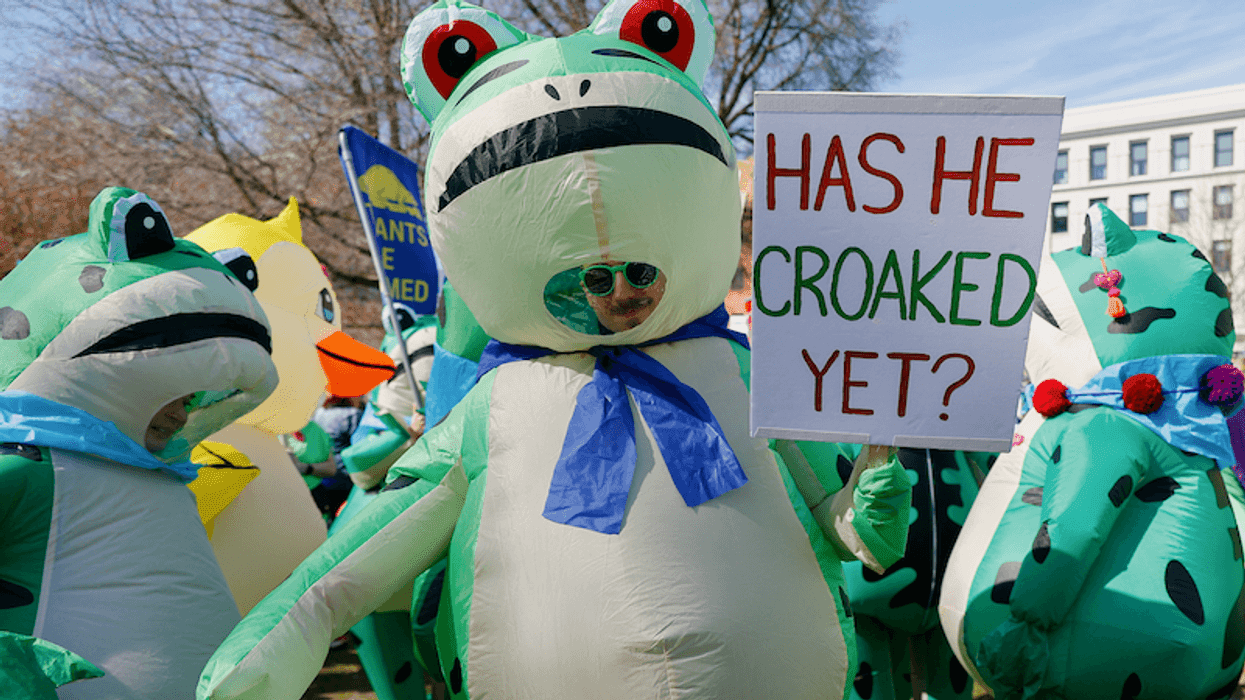
The stark contrast between the vibrant energy of the “No Kings” protests and the somewhat subdued atmosphere at this week’s Conservative Political Action Conference (CPAC) has become a talking point, with political commentators highlighting a significant disconnect within the Republican party. While thousands of Australians took to the streets over the weekend, voicing strong opposition to President Donald Trump and his administration’s policies, the CPAC gathering appeared to draw a notably smaller crowd compared to previous years.
This disparity has led many to question the current state of the Republican base and the party’s leadership. George Conway, a prominent attorney and former Republican who has since become a vocal critic of Trump, suggested that the widespread protests should serve as a serious wake-up call for GOP leaders.

“Sweating Bullets”: The Growing Concern within the GOP
Conway expressed a strong belief that Republican leaders are increasingly anxious about the political landscape. He referenced an earlier report suggesting that Senator Ted Cruz had voiced concerns to Trump about the potential electoral fallout from Trump’s leadership, fearing a significant defeat in upcoming elections. Conway recounted Trump’s reported dismissive response, implying a disconnect between the President’s confidence and the perceived risks by some within his own party.
“Oh, I think they’re sweating bullets,” Conway stated. “I think they’re very, very worried. I think they’ve been worried for quite some time. I remember reading a few weeks ago something in Axios, where Ted Cruz was telling Donald Trump that he was concerned that Trump was leading them over the edge and over the cliff in the fall elections, and that they’d be slaughtered in the fall elections, and Trump’s response was ‘F you,’ and so I think they’re scared.”
Policy Lapses and the Struggle for Relevance
Beyond the electoral anxieties, Conway also pointed to perceived policy shortcomings as a source of concern. He specifically mentioned the lack of a clear plan regarding Iran and a general impression that the administration’s approach is often improvisational.
“I think they realize Trump has no plan in Iran,” Conway added. “He has no plan for anything. It’s just all about him making things up as he goes along, and, you know, this whole all the TSA, the TSA debacle at [Baltimore/Washington International Thurgood Marshall Airport] and other airports, that’s not good. Republicans own that…”
The recent issues at airports, including disruptions at TSA checkpoints, were cited as an example of a problem that the Republican party is now associated with. Conway suggested that this, along with other pressing issues, is prompting a realisation within the party that they need to demonstrate tangible action to the public.
“…and so I think that they have to be very, very scared. I think that’s why the senate passed a bill to to fund TSA, the TSA, and and why the Senate voted for that housing bill in the last week or two. They realize that they have to they have to get their act together and make like they’re doing something for the people, but Donald Trump won’t let them.”
This sentiment suggests a potential internal struggle where the party’s desire to address public concerns is being hampered by the President’s own agenda or approach.
CPAC’s Faltering Momentum
The perceived decline in enthusiasm for the Republican party was further underscored by observations at CPAC. Unlike previous iterations, the event reportedly saw thinner attendance, and notably, Donald Trump himself did not make an appearance.
Adding to the awkwardness, event organiser Matt Schlapp reportedly faced a challenging moment when the audience expressed support for Trump’s impeachment, a sentiment that seemed to catch him off guard.
The Challenge for Democrats: Channeling Public Energy
Panelists on “MS NOW” discussed how Democrats might leverage the widespread public engagement seen in the “No Kings” protests. Elise Jordan, a panelist on the program, highlighted the stark difference in energy levels.
“Well, and so to that point, if they are not having as much fun as the protesters around the country seem to be having more fun, even amid all of the horror and chaos that’s happening,” Jordan remarked. “So how do Democrats channel that energy and turn it into success in the midterms?”
This question points to a broader political strategy discussion: how can opposition movements effectively translate public sentiment and protest energy into concrete political gains, particularly in upcoming elections? The contrast between the visible passion of protesters and the less enthusiastic reception at a key party conference suggests an opportunity for opposing political forces to capitalize on this perceived momentum. The “No Kings” protests, with their significant turnout and clear messaging, represent a powerful demonstration of public dissatisfaction that analysts believe could have a tangible impact on the political landscape if effectively harnessed.