A Turning Point for Greyhound Racing in Orange
In the challenging financial landscape of local government, it takes a significant event to prompt a council to reject a potentially lucrative deal. For the city of Orange in New South Wales (NSW), two key factors have led to a decision to say “no” to a previously welcomed greyhound racing project. The first was a strong public backlash against the industry’s association with animal welfare concerns and its perceived negative impact on the community. The second was a sense of being misled by an industry that exaggerated its economic benefits and commitment to animal care.
The situation began in 2023 when the NSW Greyhound Breeders, Owners and Trainers Association was looking for a site to build a $16 million “Centre of Excellence.” They found an abandoned harness racing track on the outskirts of Orange, a growing area west of Sydney. The 16 hectares of land were owned by Orange City Council, and a deal was struck to sell it for around $1.6 million. Councillors were promised a state-of-the-art facility that would include a modern track, a large function centre, and other amenities. The revenue from the sale was seen as an added bonus.

However, when the development application was finally submitted, the reality was far less impressive. The proposed project turned out to be a basic structure with only 112 race day kennels and seating for 64 people. A facility initially described as a Centre of Excellence was revealed to meet only minimum standards, which upset some councillors who felt they had been misled.
As part of the application, the breeders and trainers association also presented a report claiming the industry contributed $19 million annually to the Central West economy. This figure was disputed by economists and based on outdated data. Additionally, the proposed track would have a curved design instead of a straight one, which is considered safer for dogs. In early 2025, three months of data showed a high rate of injuries, including two deaths and 42 serious injuries. A 2025 government-commissioned inquiry recommended all new tracks should be straight, but this advice was ignored by the breeders, trainers, and owners.
Residents of Orange were quick to voice their opposition to the project, as the industry is associated with death, injuries, and gambling. Emeritus Professor Bob Meyenn expressed his concerns at a council meeting, stating, “Orange is an exciting community; it has food and wine, families, fun and sport, health and education. We are a really top-class community. But this proposal isn’t Orange.”
Amid the controversy, Orange City Council decided to oppose the project. While this decision might not cause much ripple outside the Central West, it reflects a shift in public opinion towards greyhound racing, even in regions where it has traditionally been supported. The impact of former premier Mike Baird’s proposed greyhound ban led to the loss of the Orange seat in a 2016 byelection, marking a significant political shift.
Neil Jones, a former Greens councillor and founder of the Community Before Greyhound Tracks campaign group, argues that the project is about expanding broadcasting and online wagering without benefiting Orange and posing significant risks to dogs. He highlights a social impact report that ranked the likelihood of gambling-related harm as “high.” Race meets would occur just once a week and attract fewer than 100 spectators, which he notes is less than the turnout for a junior soccer game.
During a recent council meeting, councillors voted 5-4 to oppose the development application. The Western Regional Planning Panel will make the final decision on Tuesday, as the project exceeds $5 million in value. Some councillors were hesitant due to potential financial implications for ratepayers. If the project fails, the council might retain some of the deposit paid by the greyhound industry but miss out on the majority of the sale proceeds. However, Jones believes the council could generate ten times more if the land were used for residential or commercial purposes.

The outcome of Tuesday’s regional planning panel remains uncertain. While the council’s opposition is significant, panel members may not be swayed by arguments regarding the project’s poor use of land and its social impacts. The industry still enjoys support from the Minns government.
Lisa White, president of Friends of the Hound, commends Orange for sending a message about the industry. “It’s quite incredible that the greyhound racing industry in Australia is still building or proposing to build new tracks when we can see that the global trend has been to end dog racing,” she says. Greyhound racing ended in Orange over two decades ago, and a track in nearby Bathurst closed in late 2022. Greyhound Racing NSW plans to close several of its 26 tracks in the coming years, despite breeding far more dogs than needed.
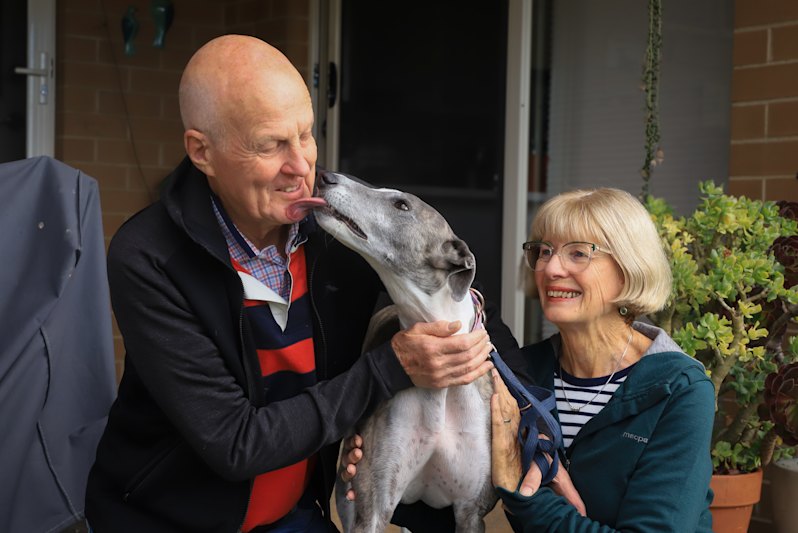
White’s charity cares for discarded greyhounds, and she has helped around 1200 dogs over the past two decades. “The community now understands what actually happens with greyhound racing,” she says. “We’re talking about man’s best friend here. Most Australians consider dogs as family members, not as gambling chips.”
Comment was sought from the NSW Greyhound Breeders, Owners and Trainers Association.