Marquez Battles Lingering Pain After Austin Practice Crash
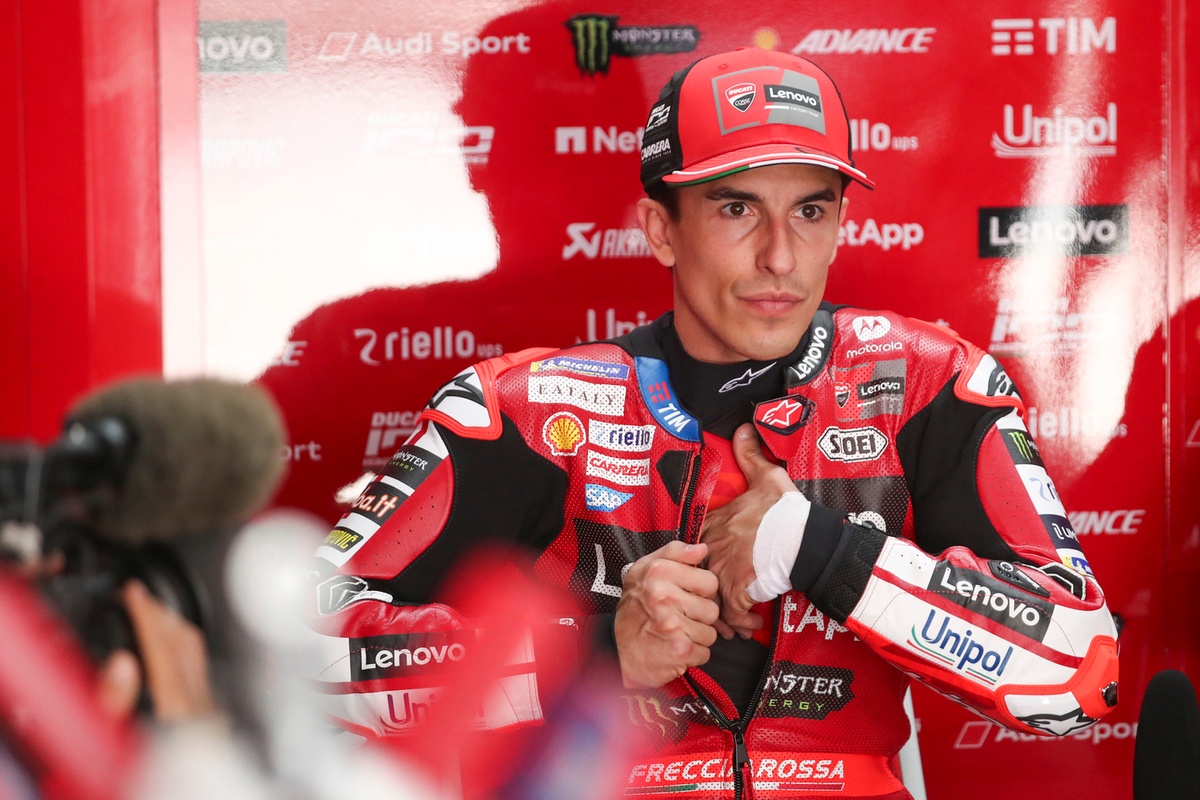
The United States Grand Prix weekend in Austin, Texas, has presented a significant challenge for factory Ducati rider Marc Marquez, who admitted to experiencing widespread pain following a high-speed crash during Friday’s opening practice session. The incident, which occurred at the notorious Turn 10, left the Spaniard nursing aches and pains that he fears could impact his performance throughout the remainder of the event.
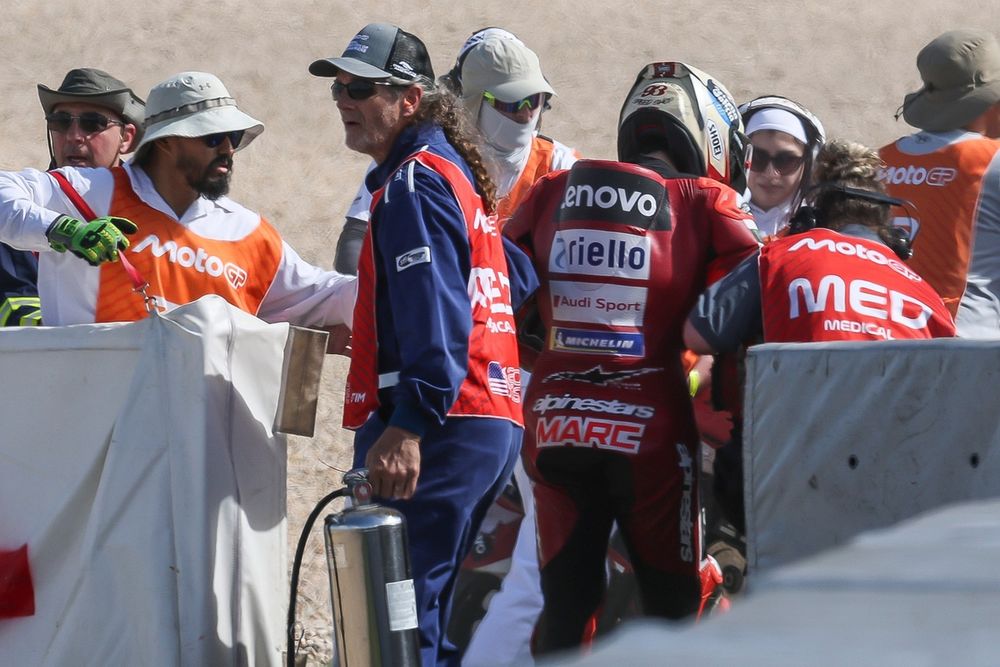
The crash unfolded as Marquez was progressively increasing his pace on the challenging Circuit of the Americas (COTA) track. While navigating the crest leading into Turn 10, a fast left-hander, he lost control of his machine. The bike slid extensively along the asphalt before venturing into the gravel trap, ultimately culminating in an impact with the air fence at the corner’s exit.

The immediate aftermath saw race control red-flag the session. Marquez was visibly uncomfortable as he made his way back to the pit lane on a scooter. Despite the alarming nature of the fall, MotoGP’s chief medical officer, Angel Charte, ultimately cleared the six-time premier class champion of any serious injuries. This medical clearance allowed Marquez to return to the track later in the session, where he managed to set the fourth-fastest time.
Adding to the narrative of his challenging Friday, Marquez went on to dominate the main Practice session in the afternoon. His stellar performance secured him a coveted direct spot in the crucial Q2 qualifying session, a testament to his enduring skill and determination. However, despite this impressive recovery and pace-setting effort, the 33-year-old remains acutely aware of the physical toll his crash has taken.
Acknowledging the Mistake and the Impact
Speaking to reporters in Austin, Marquez detailed the incident, taking full responsibility for the crash. “Today was completely my mistake,” he stated. He elaborated on his connection with Turn 10, describing it as one of his favourite corners, a place where his riding style typically excels.
“You have a memory to do a corner in one mode, and already on lap 3-4, I tried to make the corner like always, but I was not careful that on this circuit, there are new bumps from one year to the other one,” Marquez explained. He highlighted the treacherous nature of the corner, noting that many riders had experienced difficulties there due to the significant bumps present before the lean-in point.
“Luckily for this afternoon, I changed the line a bit, but I was too optimistic on that first lap,” he continued. “In the end, I saved that crash, but during the whole weekend, I will struggle a bit more because the problem is that I hit the wall at high speed.”
The Pervasive Nature of the Pain
When questioned about the specific areas where he was experiencing discomfort, Marquez’s response painted a picture of widespread soreness. “The arms, the fingers, everywhere,” he replied. “When you have that kind of crash, it is everywhere, but especially the back and the neck is the worst point. Let’s see because now it’s still warm. Let’s see how I will get up tomorrow.”
Adding a touch of his characteristic humour, Marquez revealed that his previously injured right shoulder, which sustained damage at the 2025 Indonesian Grand Prix, was not a primary concern. “Shoulder is okay. After that, I feel less pain in the shoulder, because the pain is concentrating on other points,” he quipped.
Concerns Over Track Safety
The incident occurred at a significant speed, with Marquez travelling at over 190 km/h when he lost the rear of his Ducati. Given the high velocities involved at Turn 10, the seven-time world champion voiced his concerns regarding the circuit’s safety features, specifically calling for an expansion of the run-off area at the critical corner.
“On that corner, some riders already arrived at the wall,” Marquez observed. “It’s a bit on the limit, because we arrive at a high speed there, as you see, 200km/h.” He further explained how the immediate loss of front grip upon applying throttle exacerbated the situation, leading to the high-speed impact with the barriers.
“So if we increase the run-off area a bit there, it will be better,” he urged. Marquez acknowledged that while the machinery will change next year with the introduction of 800cc bikes, he believes the current safety measures are insufficient even for the current Moto2 machines.
The United States Grand Prix continues with further practice and qualifying sessions, with Marquez aiming to manage his physical condition while contending for a strong result at a circuit where he has historically excelled. His resilience in the face of pain and his commitment to pushing the limits will undoubtedly be a key storyline to follow throughout the weekend.