A Journey from Addiction to Advocacy
Michael Cordner’s journey in boxing was driven by a desire to be the best—whether that meant Olympic gold or a world title. However, the most challenging battle he faced wasn’t in the ring but against mental health struggles and opioid addiction.
Growing up in Torquay, a beachside town in Victoria, Mr Cordner discovered two vices during his early teens: boxing and benzodiazepines. The latter was prescribed after a mental health referral at the age of 14. In the ring, known as “The Slenderman” for his long limbs, he achieved success, winning an amateur state title before transitioning to professional boxing.

The pandemic disrupted this path, stripping away the thrill of the sport and leading Mr Cordner down a troubling route. He recalls, “I was heavily taking benzodiazepines and I didn’t realize it was a problem for me. I was still fighting, finishing school, and doing all the things I needed to do. It was only when I stopped taking them that I realized I had a real problem.”
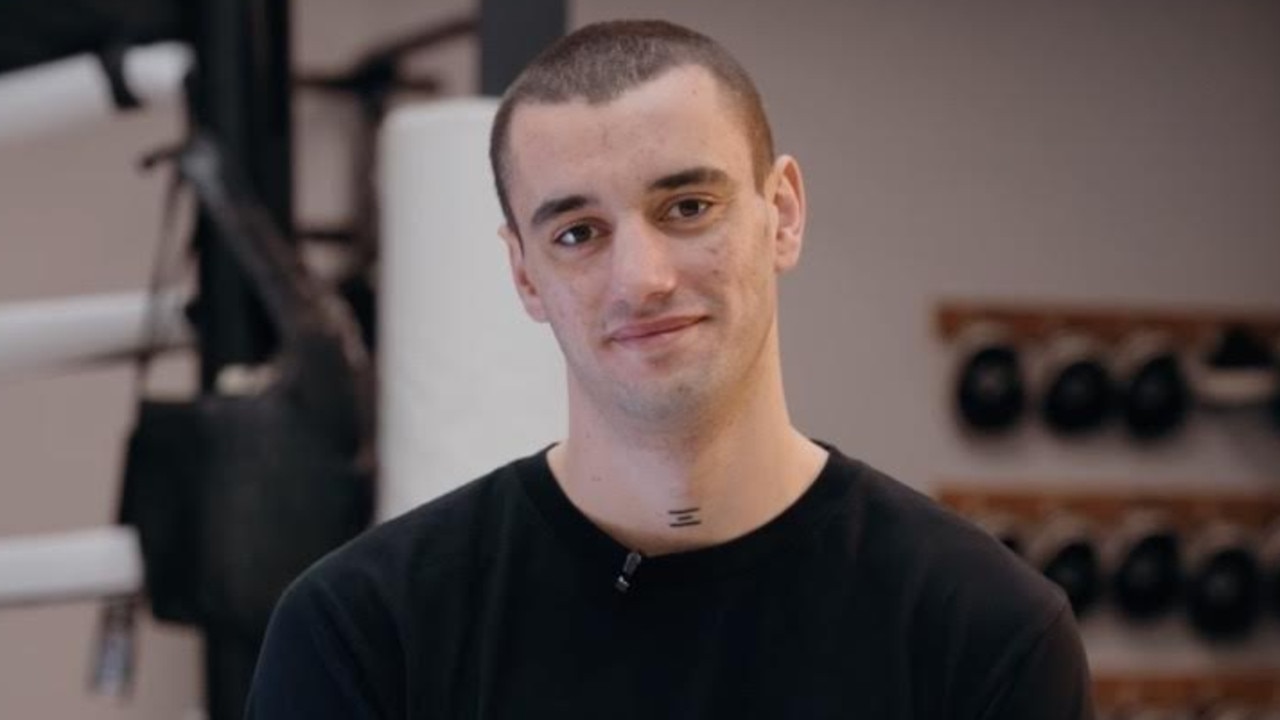
At 18, his prescription for benzodiazepines ended, and the withdrawal symptoms forced him to seek the medication illegally. “When the pandemic hit, I lost my other vice,” he said. “I no longer had boxing, I had nothing to keep me focused. That’s when I latched myself onto opioids to keep me ticking over.”
During this time, he became a known entity to the police and deepened his drug abuse. “Being full of Xanax at the time, I thought I could get away with anything,” he recalled. In 2020, his home was raided by police following a bizarre plot where he impersonated an officer to avoid a fine for trespassing on a closed track. During the raid, drugs, an imitation handgun, and a cache of knives and swords were seized.
“I was in bed and armed police officers kicked down the door, charged into my room and searched the place,” he said. “I had drugs in the house and it ended up being a big ordeal. I was a coach, an upcoming boxer, and someone younger people looked up to. Now I’m this guy, wacked out of my head and in trouble with police—I realized something had to change.”

It was during his two stints in rehabilitation that Mr Cordner developed the philosophy that would help him turn his life around and support others. “The only way I got through that was thinking of my whole life as a fight,” he said. “I was thinking about what I would do if I was struggling in a fight? I would slow down, I’d start jabbing and I would listen to my corner again.”
The jab is a fundamental punch in boxing used as a foundation for other punches and to gauge distance and timing. In 2022, after receiving help and relocating to Sydney, Mr Cordner founded Land the Jab, a not-for-profit organization offering programs to teach people aged 15 to 25 how to discuss mental health through learning boxing.
Mr Cordner, now 25, says the program has helped more than 100 young people find a better path. He is also studying a certificate four in Alcohol and Other Drugs to aid with his support work. The program is free, with sessions split between teaching boxing and relating those techniques to tools for improving mental health.
Programs are offered in both affluent suburbs and areas like Bondi and Airds High School near Campbelltown in western Sydney. “If you feel in danger in your life, that’s when you need to go back to your jab, whether that’s eating better, sleeping more, or just talking to people,” Mr Cordner said. “Making those small steps toward fixing your problem and improving your mental health.”

Headspace and Prince of Wales Hospital have referred youths who have experienced or are at-risk of experiencing psychosis to Land the Jab to assist in their recovery. Eastern Suburbs Mental Health Service Exercise Physiologist Chrysten Kodomichalos told The Australian that the skills taught through boxing are invaluable for individuals who have experienced a psychotic episode.
“The benefits of exercise for mental health are well researched and include stimulating key neurotransmitters essential for brain health,” Ms Kodomichalos said. “Individuals at risk of psychosis may have decline in cognitive function including working memory, decision making, attention, and situational awareness. Exercise, such as boxing, targets these skills and is valuable for individuals who have had an episode of psychosis.”
Mr Cordner shared the story of a participant in his Bondi program who turned things around through boxing after a “life-changing” psychotic episode. “One of the kids in the Bondi program who had a psychotic episode a year ago, it completely changed his life,” he said. “It helps to get people out of their head and more focused on their body, which improves the symptoms a lot. The sense of community from the group sessions also helps people at risk of psychosis.”
“He has been coming to Land the Jab and in the beginning, he was very reserved and had a hard time understanding things, but he has built himself back up. The other day, he told me he had got a job and it was a big deal for him and his family, it showed there was hope he could get a little bit better. I was very proud of him for that.”