
New Leadership for Australia’s Defence Force
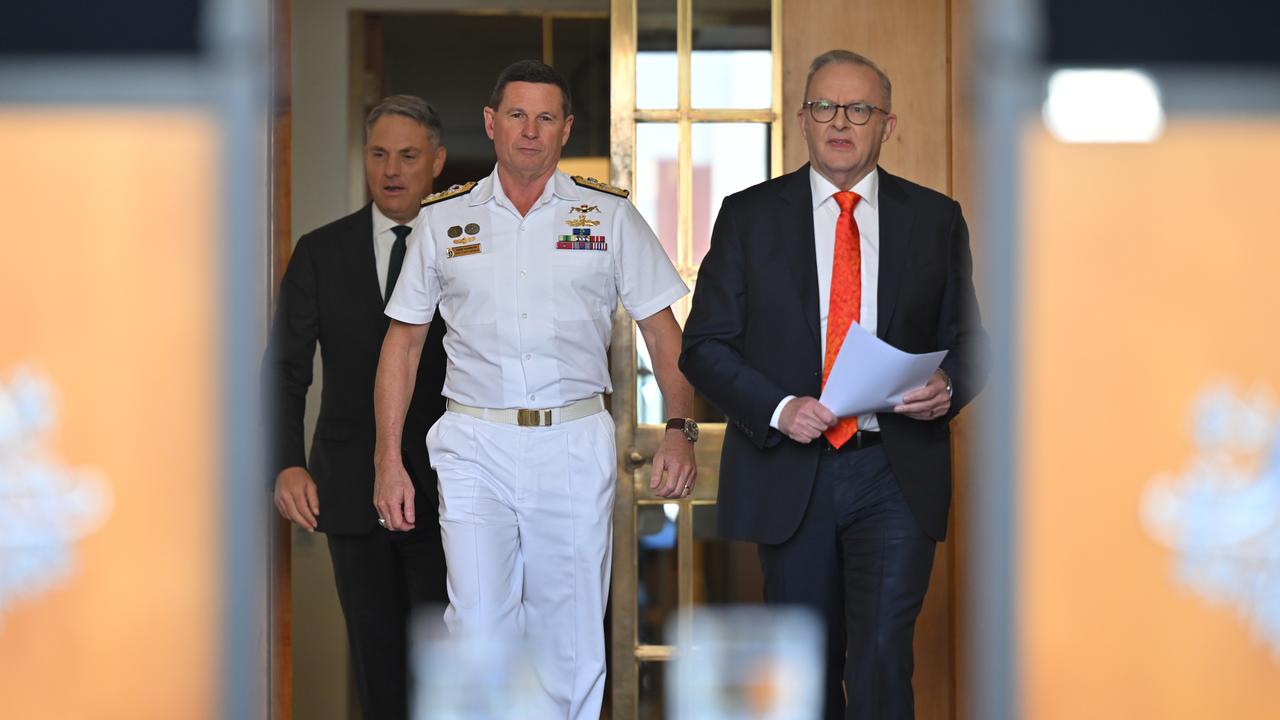
Australia’s defence force is set to be led by a submariner for the first time in its history, marking a significant shift in leadership. Vice Admiral Mark Hammond has been appointed as the new chief of the Australian Defence Force (ADF), a role that will see him take over from David Johnston in July. This appointment comes amid ongoing challenges and strategic shifts within the military.
Vice Admiral Hammond, who has served in the Royal Australian Navy for 40 years, was named chief by Prime Minister Anthony Albanese. His career began in 1986 as an electronics technician before transitioning into a naval officer two years later. Over the years, he has held various roles, including commanding the HMAS Farncomb, a Collins class submarine, across the Indo-Pacific region. He also served as an assistant naval attache in Washington DC.


Since becoming head of the navy in July 2022, Vice Admiral Hammond has played a key role in overseeing the multibillion-dollar AUKUS nuclear submarine deal, one of Australia’s most significant defence projects. The responsibility of this role has not gone unnoticed by him.
“This is probably the most humbling moment in my career,” he said. “I certainly look forward to serving with and for Australia’s sailors, soldiers and aviators as their chief of defence force through the challenging times ahead.”

Experts believe that while the AUKUS deal will be a major focus, there are other pressing issues that the incoming chief must address. Jennifer Parker, an associate professor at the Australian National University, highlighted the increasing demands on the ADF to operate in areas such as the South China Sea and the wider Indo-Pacific.
“We will see increased demands on our defence force to operate both in the South China Sea, the wider Indo-Pacific and other areas of the world,” she said. “Those demands will need to be balanced against trying to upgrade the defence force.”
Parker added that while the AUKUS deal is significant, it may not have been the primary reason for Vice Admiral Hammond’s appointment.
Strategic Shifts and Leadership Changes
The announcement of Vice Admiral Hammond’s appointment comes just before the government is set to unveil its two-year defence strategy. This strategy is expected to outline the future direction of Australia’s military and its response to emerging threats.
In addition to Vice Admiral Hammond’s appointment, Prime Minister Albanese also announced Susan Coyle as the next chief of the army. Coyle, currently the chief of joint capabilities, has a long and distinguished career in the military. She first enlisted in the army reserves in 1987 and has since been deployed to East Timor, the Solomon Islands, and Afghanistan.

In 2020, she became the first woman to command the joint task force for all Australian operations in the Middle East. Her appointment marks a milestone in the leadership of the Australian Defence Force.
Meanwhile, Rear Admiral Matthew Buckley, the current deputy chief of the navy, will be promoted to the top job following Vice Admiral Hammond’s elevation. This change reflects the ongoing restructuring and development within the military.
Defence Industry Minister Pat Conroy praised the appointment of Vice Admiral Hammond, stating that it is significant for the defence force. “He’ll do a great job as we re-equip the Australian Defence Force to face those confronting strategic circumstances,” he said.
Challenges Ahead
As Vice Admiral Hammond steps into his new role, he will face a range of challenges. These include managing the complexities of the AUKUS submarine deal, ensuring the readiness of the ADF for global operations, and balancing the need for modernization with existing commitments.
The coming years will test the leadership and strategic vision of the new chief. With the global security landscape evolving rapidly, the ADF must adapt to meet new threats and maintain its effectiveness.
The transition of leadership within the ADF signals a new chapter for Australia’s military, one that will require careful planning, strong leadership, and a commitment to excellence. As the nation prepares for the future, the role of the chief of the Defence Force will be more critical than ever.