The Supreme Court’s Role in Shaping Political Power
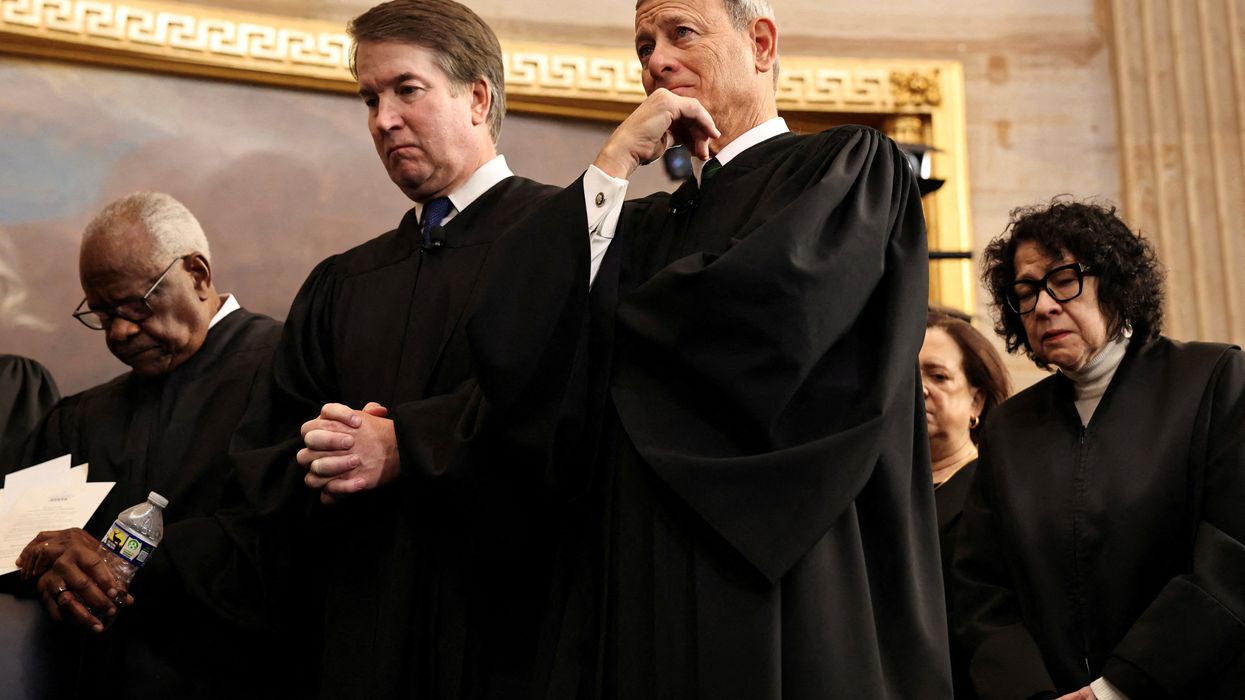
The recent decision by the Supreme Court has had a significant impact on the political landscape, particularly for House Republicans. By ruling in favor of preserving the party’s congressional majority, the court’s conservative bloc has provided a timely boost just before the 2026 midterm elections. This intervention has helped to prevent a potential Democratic wave that could have threatened the Trump administration and the integrity of the high court itself.
A Shift in Voting Rights
The decision in Louisiana v. Callais, authored by Chief Justice John Roberts and Justice Samuel Alito, has effectively dismantled the last remaining protections under the 1965 Voting Rights Act. This ruling has led to a new wave of partisan redistricting, especially in the South, where white-majority legislatures are now more empowered to redraw congressional maps to ensure continued Republican dominance. This outcome is a predictable result of a series of decisions that have weakened racial equality and allowed for the entrenchment of GOP power.

Racial Neutrality or Justification for Discrimination?
The court’s decision has been criticized for its claim of “racial neutrality” while simultaneously undermining minority political power. Critics argue that the traditional values of good government and constitutional jurisprudence have been eroded over the past two decades. The overturning of Roe v. Wade has further diminished women’s control over their bodies, with consequences already being felt in states with restrictive laws. In the case of Callais, Black and Latino Americans face the loss of political influence in highly segregated regions, reminiscent of the Jim Crow era.
Flawed Legal Reasoning
Justice Alito’s reasoning for abandoning established precedent and the clear intent of the Voting Rights Act lacks logical coherence. Instead of examining whether a state’s map created a racial hierarchy, the court now demands proof of racist intent from legislators. Justice Elena Kagan highlighted the impracticality of this standard in her dissent, noting that it is not only unrealistic but also an invented requirement.
Misleading Arguments
Alito’s argument that recent presidential elections indicate progress beyond the Voting Rights Act is based on selective data. He cited higher Black voter turnout in two recent elections, which coincided with Barack Obama’s candidacy. However, this does not reflect the realities of congressional elections, where turnout can differ significantly. The focus on these specific years overlooks the broader context of voting patterns and the ongoing challenges faced by minority voters.
Contradictory Judgments
The justices’ support for the decision in Callais contrasts with their previous stance in Allen v. Alabama, where they rejected similar arguments about proving racist intent. In that case, the court mandated a new congressional map that allowed Black voters to elect two members of Congress. The shift in position raises questions about the motivations behind the current decision, particularly given the political climate following the 2024 election of Donald Trump and the subsequent Republican majorities in both chambers of Congress.
Protecting Power and Avoiding Scrutiny
The right-wing justices’ stance on “racial gerrymandering” appears to be more about protecting their own power than addressing genuine concerns. Their support for the decision may be driven by a desire to avoid scrutiny if Democrats regain control of either chamber. Should Democrats take the Senate, there is a strong possibility that the current Supreme Court majority will face investigative challenges and legislative action. This dynamic highlights the complex interplay between judicial decisions and political power.
Conclusion
The Supreme Court’s recent actions have far-reaching implications for the future of American democracy. As the political landscape continues to evolve, the role of the judiciary in shaping electoral outcomes remains a critical issue. The decisions made by the court will not only affect the immediate political climate but also set precedents that could influence the nation’s trajectory for years to come.