Sydney Harbour Gears Up for Enhanced Shark Detection Following Summer Attacks
Sydney Harbour is set to receive a significant boost in its shark monitoring capabilities with the planned installation of two new “listening stations” – advanced shark detection buoys. This proactive measure comes in the wake of a concerning spate of shark encounters that plagued the region over the summer months, prompting a reassessment of safety protocols within the iconic waterway.
The proposed locations for these crucial pieces of technology have now been revealed, with one buoy slated for deployment several hundred metres offshore from the popular Balmoral Beach on Sydney’s lower north shore. The second listening station will be strategically positioned near the Sow and Pigs reef, a familiar landmark close to Camp Cove Beach in the city’s eastern suburbs. This latter location holds particular significance, being in proximity to the area where a young boy tragically lost his life to a shark bite off Vaucluse in January.

Marcel Green, who heads up the NSW government’s shark management program, explained the rationale behind these chosen sites. “The main focus is trying to look at those beaches that are used down in the lower parts of the estuary, such as there at Vaucluse and Nielsen Park, and also over there at Balmoral Beach,” Mr Green stated. He highlighted that these areas are known transit routes for various shark species, making them prime locations for detection.
How the Listening Stations Work
These sophisticated listening stations operate on a simple yet effective principle: they detect electronic “pings” transmitted by specially fitted tags attached to certain species of sharks. Once a tagged shark comes within a 500-metre radius of a station, the system is activated.
The data collected by these buoys is then relayed to users via the government-run SharkSmart mobile phone application. This app provides real-time alerts, informing swimmers and other water users about the presence of a tagged shark in their vicinity. Currently, there are 37 such listening stations deployed along the broader New South Wales coastline, forming a network of early warning systems.
It is important to note a key limitation of this technology: the listening stations are only capable of detecting sharks that have been tagged and whose tags are functioning with sufficient battery power. As Mr Green acknowledged, “You’ll never be able to tag every shark that swims in the ocean, but we’re pretty confident that we’re going to have a really good handle on it over the next couple of years.” The strategy relies on a comprehensive tagging program to provide a robust overview of shark movements.
Responding to a Summer of Concern
The decision to bolster shark detection within Sydney Harbour was a direct response to a cluster of shark attacks that occurred in January, affecting both Sydney and the state’s Mid North Coast. In a harrowing 48-hour period, four individuals were either bitten or narrowly avoided serious injury. The most devastating incident involved 12-year-old Nico Antic, who sustained fatal leg wounds after jumping into murky waters from a rock formation.
These attacks followed a period of unusually heavy rainfall, which contributed to brackish water conditions. Such environmental changes are known to attract sharks into shallower, more accessible areas, including estuaries and harbours.
In light of these events, the NSW government significantly increased funding for the Department of Primary Industries and Regional Development. This additional investment enabled the immediate commencement of a crucial shark tagging program, specifically targeting bull sharks within both Sydney Harbour and Coffs Harbour.
Tagging Efforts Underway
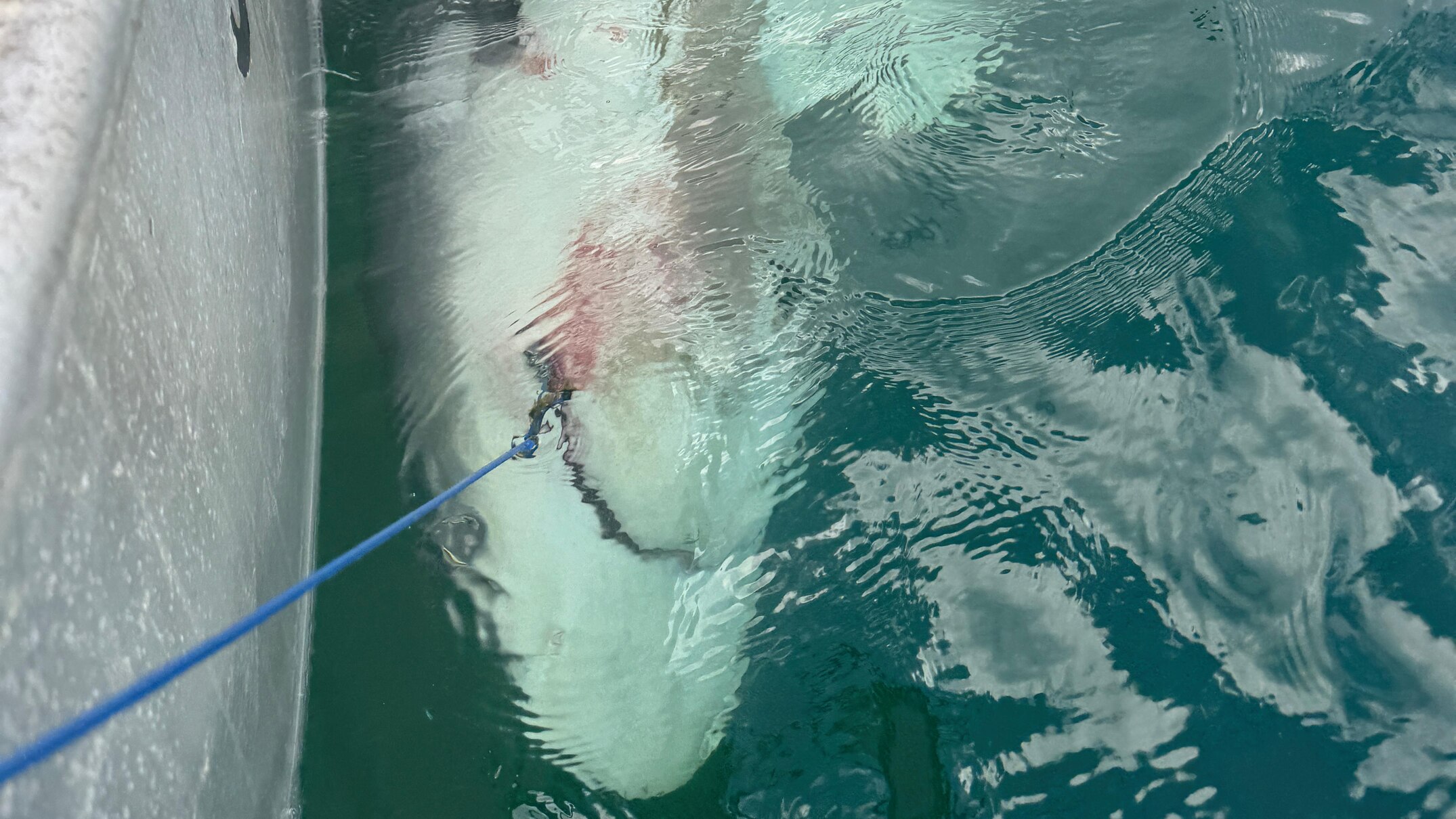
Since the initiative began in late January, scientists have been actively engaged in catching and tagging sharks. To date, four bull sharks have been tagged within Sydney Harbour, while a more substantial effort has seen 18 bull sharks tagged in Coffs Harbour.
Agriculture Minister Tara Moriarty has emphasised the scale of the government’s commitment, describing the current shark program as the state’s “biggest and most comprehensive” to date.
Future Tagging and Safety Advice
With the cooler weather prompting bull sharks to move out of Sydney Harbour, Mr Green indicated that tagging efforts would be temporarily paused and resumed later in the year. “As these animals move into the harbour, both into the southern part and up into the Lane Cove [River] through Middle Harbour, we’re then going to have a bit of a canary in the coal mine,” he explained, referring to the valuable data the tagged sharks will provide about their movements.
Mr Green also addressed concerns that the listening stations might inadvertently create a false sense of security among beachgoers. He stressed that the technology’s primary purpose is to empower individuals with information, enabling them to make informed decisions about their safety. “It’s really just about giving people some information upon which to make their own decision,” he reiterated.
He concluded by offering practical advice, stating, “Obviously, the best place to swim within the harbour is within one of the estuarine swimming enclosures.”
While the precise final locations for the new listening stations are still undergoing the necessary approval processes, they are anticipated to be operational and installed in the water within the coming months, offering a welcome enhancement to Sydney Harbour’s safety infrastructure.