Football in Turmoil: Nepal’s National Team Faces Uncertainty Amidst Leadership Crisis
Nepal’s national football team finds itself in a precarious position, grappling with a series of cancellations and a looming suspension that threatens to derail its upcoming fixtures and the tenure of its new head coach. What was meant to be a period of renewed hope and strategic development has devolved into a complex administrative quagmire, casting a dark shadow over the sport’s future in the nation.
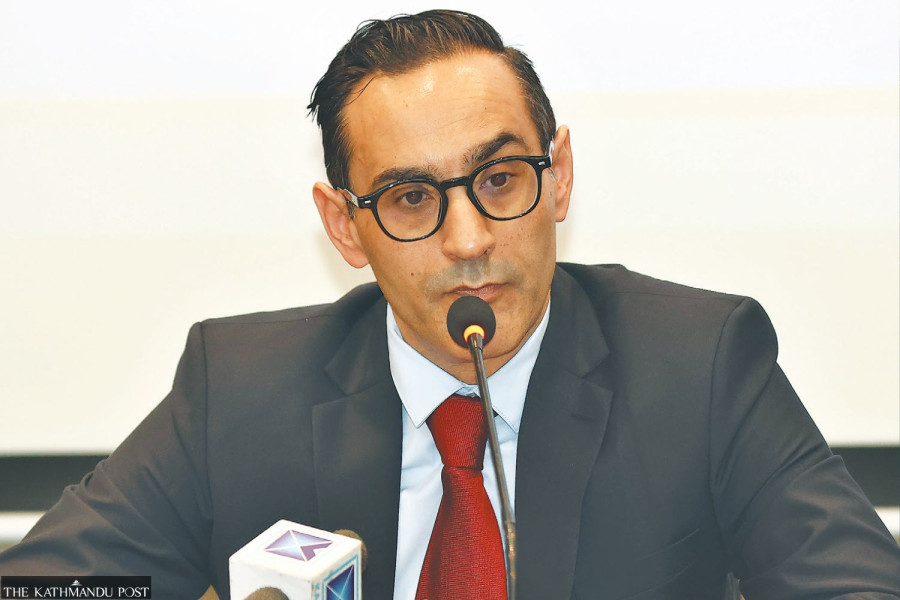
The recent appointment of Italian coach Guglielmo Arena, who signed a one-year contract with the All Nepal Football Association (ANFA) on March 12, was intended to usher in a new era for Nepali football. Arena’s initial focus was to assess the team and its enthusiastic fanbase through a friendly match against Hong Kong, scheduled for March 26. This match was particularly significant, as the Dasharath Stadium, Nepal’s primary football venue, has been under suspension from the Asian Football Confederation (AFC) since February 2024, making home games a rarity.

Arena expressed his eagerness to understand Nepali football’s passion and implement improvements, stating, “We are already out of the qualification for the AFC Asian Cup. So both the matches, against Hong Kong as well as Laos, will be friendlies. It will be very interesting to try something against them.” He added, “And then I know the fans always want the result. But we will try to make improvements, and we will try to make all the Nepali fans happy.”
However, this hopeful outlook was quickly overshadowed by a series of unfortunate events.
A Cascade of Cancellations
The friendly against Hong Kong was abruptly cancelled by ANFA on March 22. The association pointed fingers at the National Sports Council (NSC), the governing body and owner of the Dasharath Stadium, for failing to grant permission for the match. Conversely, the NSC maintained that permission had indeed been granted.
Adding to the confusion, the Hong Kong Football Association (HKFA) also announced the cancellation on the same day. Their statement cited “political tensions in the region” and stated that “the organisers feel that the arrangements are not going on as scheduled and have decided to cancel the game.” ANFA subsequently apologised to HKFA for the “temporary cancellation.”
The fallout from these cancellations has extended to Nepal’s upcoming fixture against Laos on March 31, part of the 2027 AFC Asian Cup Qualifiers – Third Round. This crucial match is now at risk due to ANFA itself facing an unprecedented situation.
ANFA Under Suspension: A Self-Inflicted Blow?
The ongoing dispute between the NSC and ANFA reached a critical juncture on Wednesday, March 27, when the NSC suspended ANFA for three months. The primary reason cited for this drastic measure was ANFA’s alleged defiance of the NSC’s directive not to proceed with its central executive committee elections without first conducting fresh elections at the district branches. ANFA, however, insisted on pushing for an early election.
The election process, intended to be held in Jhapa, became a focal point of contention. By Thursday evening, ANFA declared the election postponed after a significant portion of the 88 voting representatives had gathered in Jhapa, while others in Kathmandu objected and withdrew their candidacies. The planned ordinary congress-cum-election consequently transformed into a platform for ANFA President Pankaj Bikram Nembang and General Secretary Kiran Rai to voice their perspectives.
Kiran Rai highlighted that ANFA had received approval from FIFA and AFC, and the Patan High Court saw no impediment to the election. “But the Council suspended us while we were en route to Jhapa,” Rai stated. He emphasized their adherence to Nepali laws, which led to the postponement, and the subsequent request for FIFA and AFC representatives to return.
Pankaj Bikram Nembang acknowledged the suspension but placed the responsibility for Nepali football squarely on the NSC. “All the responsibilities of Nepali football should now be undertaken by the Council,” Nembang declared. He also expressed hope that the Council would continue the various services ANFA provides to players, coaches, referees, and other stakeholders. ANFA’s expectation is that the NSC will now ensure Nepal’s participation in international football, with the match against Laos being the immediate priority.
Echoes of Past Incompetence: A Bad Omen for Foreign Coaches?
This administrative turmoil draws uncomfortable parallels with the Cricket Association of Nepal’s (CAN) three-year suspension by the International Cricket Council (ICC) in 2016, largely due to government interference in elections. FIFA and AFC have repeatedly cautioned Nepali authorities against interfering in ANFA’s electoral processes, warning of potential suspension.
Such an international ban would have severe repercussions:
- Exclusion from tournaments: Nepal would be barred from participating in events organised by FIFA and AFC.
- Diplomatic isolation: Other national teams would likely refuse to engage in friendly matches with Nepal.
- Cessation of support: Financial and logistical aid from FIFA and AFC would be halted.
However, the immediate concern is Nepal’s participation in the match against Laos, which might be jeopardised even before an official FIFA suspension. The fixture, originally intended as a home game for Nepal, is now being hosted by Laos at the National Stadium KM16 in Vientiane due to the lack of an internationally compliant stadium in Nepal.
“The team should leave for Laos by Sunday,” Nembang mentioned, but added, “we do not have the authority after the suspension. We believe the Council will look after it.” This situation presents a disheartening start for Guglielmo Arena’s tenure, especially given his past role as head coach of Laos. His ambition to lift the SAFF Men’s Championship with Nepal now appears increasingly distant.
The crisis also casts a pall over the upcoming SAFF Women’s Championship. “Women’s football has reached bigger heights during our tenure. We do not want it to hit rock bottom,” Rai lamented, indicating that Nepal’s participation is also in jeopardy due to the suspension.
A Glimmer of Hope Amidst the Chaos?
ANFA’s proposed solution to the current predicament is for the NSC to lift the suspension unconditionally. During a gathering in Jhapa, Nembang’s supporters rallied behind him, their applause underscoring their defence of his leadership. The event concluded with a resounding chant of “Nepali football ko jay” (Victory to Nepali football).
However, the reality outside that hall paints a starkly different picture: a national team lacking a venue, a coach facing uncertain fixtures, and a sport seemingly locked in a battle against its own leadership.
This dissatisfaction with ANFA’s leadership had previously led Patrick de Wilde, a Belgian UEFA pro-licensed coach, to resign as the head coach of Nepal’s women’s team after only a month of his one-year contract.
Yet, amidst the gloom, a ray of hope emerged on Friday, March 28, with the appointment of a new minister for the sports sector. Sasmit Pokharel, assuming office as the Minister for Youth and Sports, expressed a commitment to professionalising sports governance. “The leadership in the NSC and other sports authorities will now have individuals with expertise in the sector. Sports will not be a place for politics from now on,” he stated. Whether this signifies a genuine shift towards a more stable and functional sporting landscape for Nepali football remains to be seen.