Aboriginal and Torres Strait Islander readers are advised that this article contains names and images of Indigenous people who have died.
A Lost Legacy Unearthed: The Birrundudu Collection and a Desert Mystery Solved
For decades, a remarkable collection of hundreds of drawings lay hidden, a testament to the artistry and cultural knowledge of Aboriginal stockmen from the 1940s. These vibrant crayon creations, depicting stories, spirit figures, and ancestral lands, have now emerged from obscurity, sparking a profound connection with descendants and rewriting a chapter of Australian art history.

Margaret Wein, a Jaru woman, experienced an overwhelming emotional response upon seeing the face of her great-great-grandfather for the very first time. “I didn’t know what he looked like,” she shared, her voice filled with awe. “It was really emotional to see his face for the first time, and see his artwork.” Her ancestor was one of sixteen men who, over eighty years ago, poured their knowledge and experiences onto paper.
In the sweltering heat and wind of 1945, these Aboriginal stockmen were invited to sit beneath a tree and, for the first time, use crayons to record the intricate tapestry of their desert country. The result was the Birrundudu collection, a staggering 810 drawings. For years, this invaluable cultural archive remained largely forgotten, tucked away in a dusty box under the bed of anthropologists Catherine and Ronald Berndt.
It wasn’t until five years ago that a dedicated effort began to unearth these artworks and, crucially, identify the men and their families who created them. Robert McKay, whose grandfather was responsible for nearly a hundred of these images, expressed a sense of destiny. “We didn’t know about these drawings… we didn’t go looking for them,” he stated. “It’s like they came looking for us.”
The Art Sleuths Embark on a Desert Quest
The journey to rediscover and revitalise the Birrundudu collection commenced in 2019. Dr. Jason Gibson, a researcher from Deakin University, visited the Berndt Museum in Perth. “The curator took me into the storeroom and said, ‘There’s this amazing collection of incredible drawings that have never been researched before,’” Dr. Gibson recounted. He was immediately captivated by the sheer scale and detail of the works. “When I first saw the images, I was gobsmacked. I couldn’t believe this large collection of extremely detailed drawings had been sitting in a museum for 80 years… they had so much cultural gravitas and aesthetic beauty that I thought, if it’s possible to share these with the world, then I’d try do everything I could to make that happen.”
This marked the beginning of a four-year odyssey of “outback sleuthing.”
Unravelling a Desert Mystery
A dedicated research team, comprised of some of Australia’s most seasoned historians and anthropologists, undertook numerous expeditions into the remote desert communities of northern Australia. They travelled over 20,000 kilometres, engaging with more than 40 descendants of the original artists and cultural leaders. Their monumental task was to identify the sixteen men behind the drawings and present these rediscovered treasures to their grandchildren and extended families for the very first time.
Professor John Carty described the process as both challenging and immensely rewarding. “We knew it was a really precious responsibility,” he said. “There was a feeling amongst the senior men that if we didn’t do this work now to reconnect with the families, it would be too difficult in 10 years’ time.”
In a newly published book that showcases the collection, Professor Carty hailed the Birrundudu sketches as “a monumental body of Aboriginal knowledge and creativity.” He lamented the historical oversight, telling the ABC, “To have had 800 pages in the history of Australia and Australian art torn out of the book is ridiculous to think about. The history of the desert and the history of Aboriginal art has been written ignorant of these amazing drawings. The fact no-one even knew they existed is one of the many remarkable elements to this story.”
The team made a total of nine trips across the vast desert landscapes straddling the Western Australia and Northern Territory border, delivering the extraordinary news to families. “They were absolutely stunned that their grandfathers had produced ‘art’, as such, 25 years before the emergence of the Papunya desert art movement,” Dr. Gibson revealed. “It was a Eureka moment, a real revelation.”
The Dusty Origins of a Hidden Treasure
The 810 drawings were created over a ten-week period on the grounds of the Birrundudu cattle station. This era was marked by significant upheaval and hardship in northern Australia, as pastoralism expanded into remote regions. Tensions surrounding land, water resources, and survival often erupted into violence, massacres, and the forced displacement of Aboriginal people onto newly established cattle stations.
It was into this volatile social landscape of the 1940s that young anthropologists Catherine and Ronald Berndt arrived. They were deeply immersed in documenting the rapidly changing way of life in remote Aboriginal communities. In 1944, they were engaged by the Vestey Bros pastoral company to study the Aboriginal communities residing and working on their northern cattle stations. The company, heavily reliant on a cheap and poorly regulated workforce, sought to ensure the sustainability of its labour practices.
The Berndts were appalled by the conditions they witnessed at Birrundudu, where sixty-five Aboriginal people were living in tents and makeshift shelters in the corner of a horse paddock. Their correspondence from the period details the deliberate underfeeding of Aboriginal workers, the consumption of foul and stagnant water, and instances of sexual exploitation by white station workers involving “pre-adolescent native girls” at the isolated outpost.
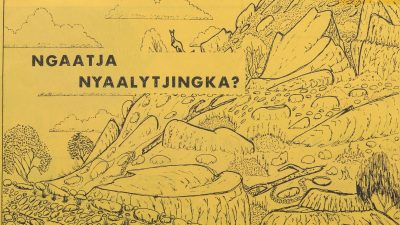
It was during this period that the Aboriginal stockmen began to draw. The Berndts’ interest in their stories and ceremonies, a rarity from the ‘gudiya’ (white people), encouraged the creation of these vivid drawings. Using waxy crayons on brown paper, they depicted flowing lines and bold colours, capturing a world of cultural significance.
The Mystery of the Hidden Drawings
The question of how these 810 drawings ended up secreted away in a box under a bed is complex, likely rooted in the morally ambiguous position the Berndts occupied. While deeply disturbed by the mistreatment of the men creating the art, they were employed by the station owners. Their findings remained unpublished for another 42 years, and the drawings were eventually boxed up and stored in their Perth home. In the late 1980s, the collection was incorporated into the larger Berndt collection at the University of Western Australia.
Jess Hutchens, co-director of the Berndt Museum, expressed relief that the drawings have resurfaced while the artists are still within living memory. “It’s hard to make sense of the fact they weren’t utilised or seen for so long; that is a loss,” she stated. “The lives that people were living on the cattle stations, the exploitation, forced displacement — it’s just incredible that we can find this archive of knowledge created at a time of real crisis and reconnect it with people.”
A Shocking Revelation for Descendants
The rediscovery of the Birrundudu drawings came as a profound shock to the descendants of the men who created them. For most, the existence of these images was entirely unknown, presenting them with an unexpected time capsule of cultural knowledge and familial heritage.
Robert Mackay, who grew up with his grandfather Paddy Padoon, was deeply moved by the legacy his grandfather had left. “When I first saw the drawings I nearly cried. I was emotional,” the Jaru man said. “He was like a father-figure to me… but I never knew that he was drawing, it really hit me.” He added, with immense pride, “I’m proud to show my grandfather’s drawings. It is a really big story.”
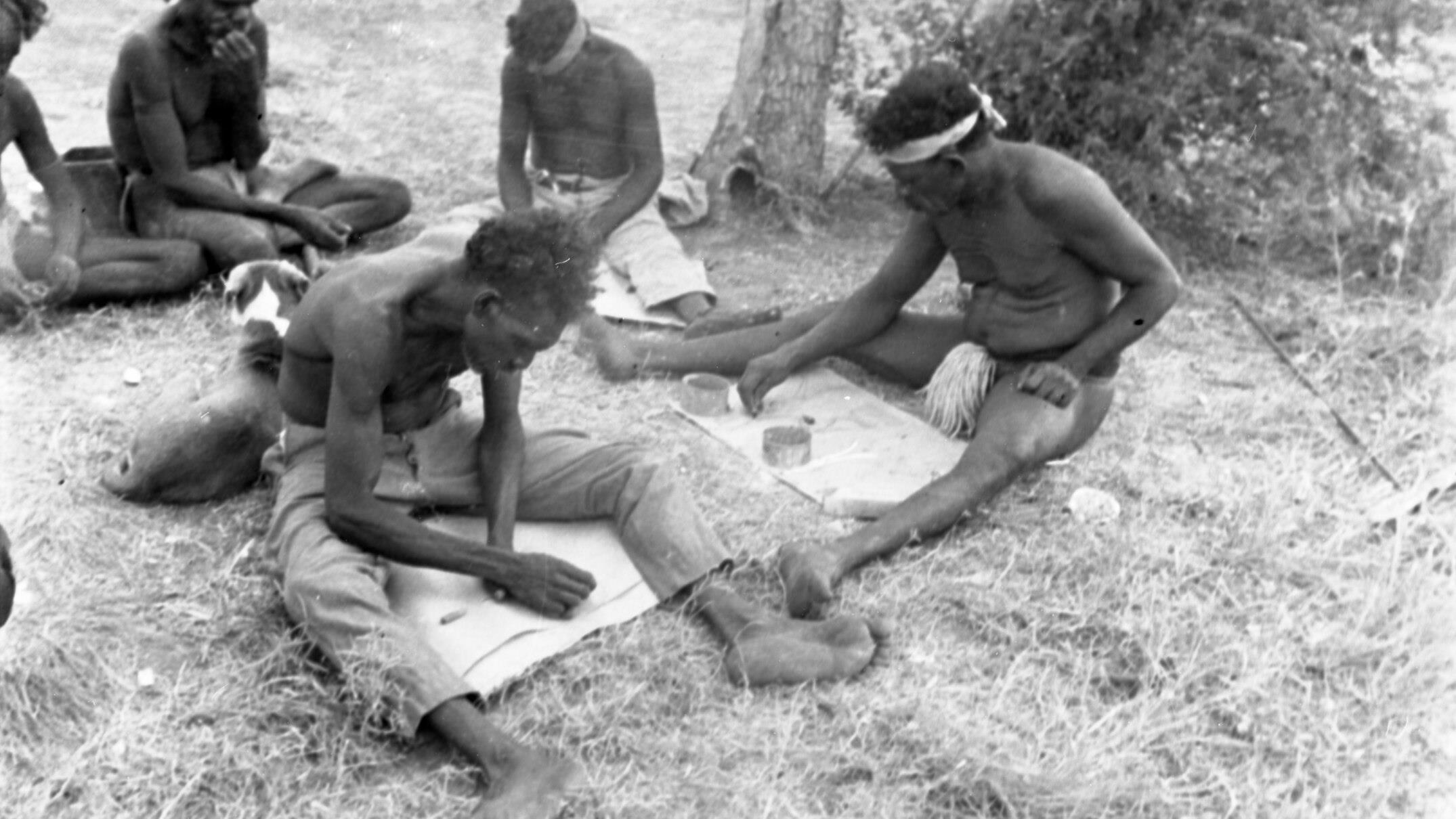
Paddy Padoon contributed 98 drawings to the collection. A photograph from that pivotal moment in 1945 captures him seated on a stretch of canvas in the dirt, barefoot and intently focused on his work. His drawings depict sacred and significant places within the landscape, including a depiction of ‘Cloud Dreaming,’ the source of rain. The intention behind these works was not merely aesthetic; those most familiar with the sketches understand them as vital records of survival knowledge in the arid environment, as well as depictions of ceremonies and spirit figures central to the men’s identity.
A New Generation’s Storytelling
The resurgence of the Birrundudu images has ignited a new wave of storytelling. The exhibition showcasing the collection features a contemporary body of work by senior lawman Jimmy Tchooga, demonstrating the enduring impact of these ancestral creations.
The legacy of these drawings continues to resonate within communities still grappling with the profound effects of those harsh 20th-century years. It was a period when two worlds collided on the remote, arid cattle stations, and these 810 sketches captured the spirits, both malevolent and benevolent, who, according to local lore, continue to inhabit the landscape, their presence still palpable.
‘Proud and Emotional’ Connections
Margaret Wein travelled over 2,000 kilometres to attend the opening of the Birrundudu exhibition in Perth. The Jaru woman had grown up hearing stories of her great-great-grandfather, Nipper Wanapiti Japaljarri, who she later discovered had created over 100 drawings in 1945. Some of these depictions are considered so sensitive that, in accordance with cultural protocols, they can only be viewed by initiated men.
Now, Margaret feels an intrinsic connection to Nipper’s story, her family’s deeply held oral histories revitalised through the series of sketches and accompanying photographs. “I can feel his presence when I look at his paintings,” she remarked, gazing at the framed crayon lines on the gallery wall. “I’d never met him and I didn’t know what he looked like, and it’s just brought out all these feelings inside.” She continues to take her “jajas and ogoos” (grandchildren) to the very places her great-great-grandfather depicted, a testament to a connection to the land that endures, despite almost a century of immense pressure and change.