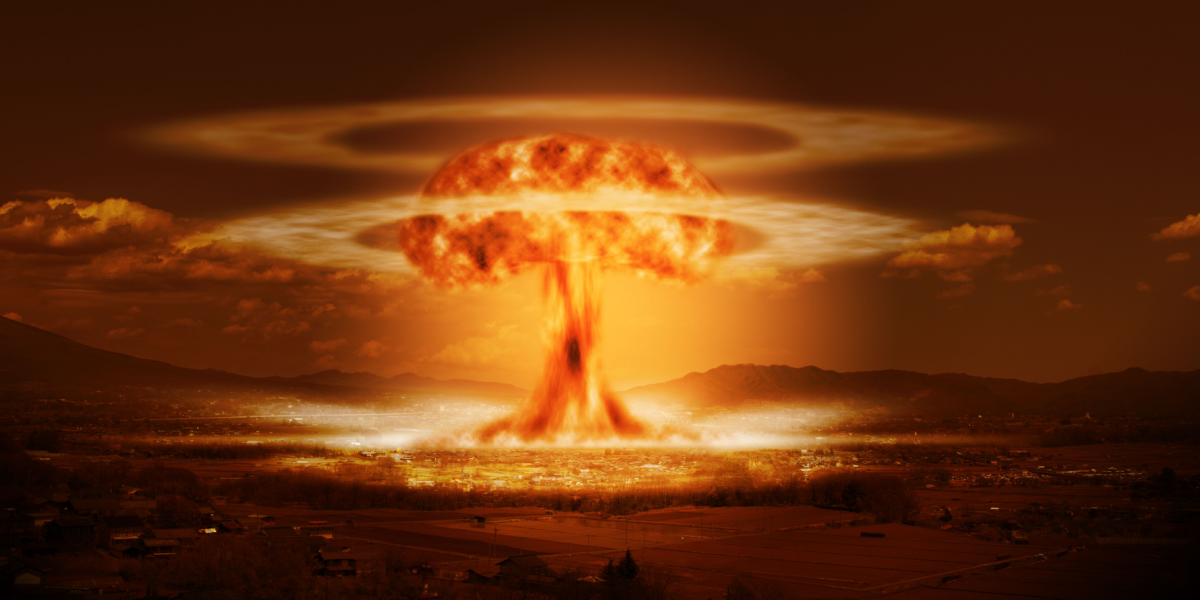
When the World Held its Breath: Close Calls in the Nuclear Age
The chilling spectre of nuclear war loomed large throughout the Cold War, a constant undercurrent of anxiety beneath the surface of global politics. While the devastating reality of atomic conflict was thankfully averted, history is punctuated by a series of near misses, moments when a combination of human judgment, technological glitches, and sheer luck prevented catastrophic escalation. These incidents, often born from the intense pressure of geopolitical tension and the limitations of early warning systems, serve as stark reminders of how close humanity has come to the brink.
One of the most lauded examples of human intervention occurred in the pre-dawn hours of September 1983. Soviet Lieutenant Colonel Stanislav Petrov was on duty at a command centre when his early warning systems blared, indicating a full-scale launch of American intercontinental ballistic missiles. Under normal procedure, such an alert would have triggered an immediate retaliatory strike, a response that would have irrevocably plunged the world into nuclear Armageddon.

However, Petrov found himself in a moment of profound personal decision. The system reported only a handful of incoming missiles, a number that struck him as highly improbable for an initial offensive strike. He later recounted that the alert simply “did not feel right.” Trusting his intuition over the cold, hard data, Petrov defied protocol and chose not to escalate the alert. His decision was vindicated when subsequent investigations revealed the cause to be a rare sensor error: sunlight reflecting off high-altitude clouds. This seemingly minor detail, preserved in the annals of Cold War history, highlights the crucial role of human discernment in preventing disaster.
When Machines Failed: Glitches in the Global Defence Network
The sophisticated, yet often fallible, early warning systems designed to detect incoming attacks were themselves a source of significant risk. Built with speed as a paramount concern, accuracy sometimes took a backseat.
The 1979 Training Scenario Mishap: In 1979, a US military training exercise was inadvertently fed into the live warning systems. For a terrifying period, operators believed a large-scale Soviet attack was underway. Thankfully, cross-checks with radar and satellite data eventually revealed the error, averting a potential crisis.
The Faulty Microchip Scare: Just a year later, in 1980, a faulty microchip caused repeated false alarms within the Soviet warning network. The system’s persistent alerts were so concerning that senior officials were woken in the early hours, grappling with the terrifying uncertainty of whether the readings were genuine.
Solar Storm Disruption: Declassified Pentagon records reveal a 1967 incident where a powerful solar storm wreaked havoc on radar coverage. The resulting interference was so significant that it initially appeared to be deliberate jamming by an adversary, sparking fears of an imminent strike before scientists could identify the true cause.
A Near Detonation: Beyond system failures, accidents also posed a grave threat. In 1961, a US B-52 bomber tragically broke apart over North Carolina, scattering two nuclear bombs. Investigations later revealed that one of the bombs came perilously close to detonating due to multiple safety mechanisms failing.
The Human Element: Courage Under Fire and Geopolitical Tensions
Not all near misses stemmed from technological malfunctions. Many arose from the intense pressure cooker of geopolitical crises, where information was scarce and decisions had to be made in mere minutes.
During the Cuban Missile Crisis in 1962, a Soviet submarine, cut off from command and control and under intense pressure from US depth charges, was reportedly preparing to launch a nuclear torpedo. It was the refusal of one officer, Vasili Arkhipov, to give his approval that is credited with preventing a devastating escalation. His courageous stand demonstrated the critical importance of individual judgment in preventing catastrophic outcomes.
Similar patterns of tension and near-escalation emerged in other global flashpoints:
- The Yom Kippur War (1973): Amidst the conflict, nuclear forces on both sides were quietly placed on high alert, a stark reminder of the ever-present nuclear threat during regional wars.
- Sino-Soviet Border Clashes (1969): These confrontations highlighted how quickly regional disputes could spiral into wider conflicts, with potentially devastating consequences.
- India-Pakistan Confrontations: Numerous clashes between these nuclear-armed neighbours have consistently raised international concerns about the potential for escalation.
The Enduring Pressures of the Modern Age
What unites these harrowing episodes is not merely their proximity to disaster, but the underlying conditions: fragmented information, the inherent limitations of technology, and immense time pressure. Analysts today warn that these pressures have not diminished; in fact, they may have intensified. The rise of cyber threats, the increasing reliance on automated systems, and the acceleration of decision-making cycles in modern warfare could leave even less room for the kind of crucial hesitation that saved the world on multiple occasions. The question that lingers is whether, in the face of ever-increasing speed and complexity, humanity will have the luxury of a pause the next time the alarms ring.