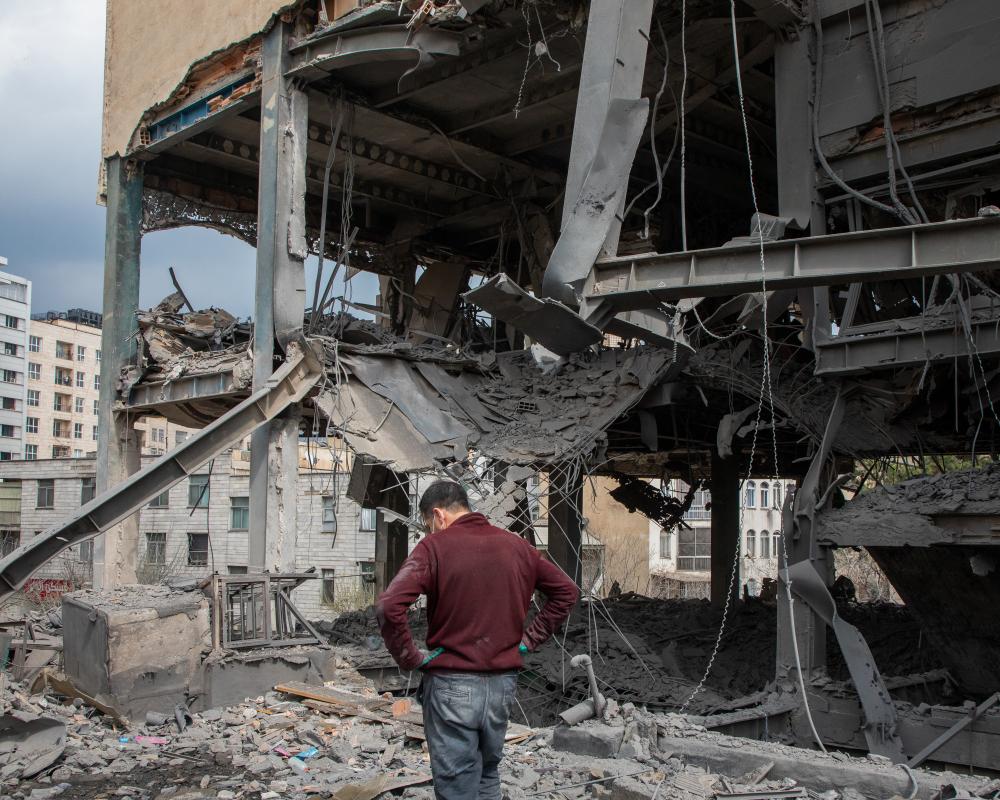
Iran Warns of Ground Assault as War Enters Critical Phase
As the devastating conflict between Iran and its adversaries enters its second month, Tehran has issued a stark warning to the United States, signalling its readiness to confront any potential ground invasion. This assertion comes amidst claims that Washington is secretly plotting a land offensive while publicly pursuing diplomatic channels for de-escalation. The war has already resulted in thousands of casualties and caused unprecedented disruptions to global energy markets.
In a pointed message marking the 30-day milestone of hostilities, Iran’s Parliament Speaker, Mohammad Bagher Ghalibaf, declared, “The enemy signals negotiation in public, while in secret it plots a ground attack.” He further asserted, “Our firing continues. Our missiles are in place. Our determination and faith have increased.” Ghalibaf added that Iranian forces are anticipating the arrival of American troops on the ground, vowing to “set them on fire and punish their regional partners for ever.”


Shifting Sands of Diplomacy and Military Readiness
The rhetoric from Tehran underscores a deep-seated mistrust of US intentions. This concern is amplified by statements from former US President Donald Trump, who, in a recent interview, expressed a preference for “taking the oil” from Iran, specifically mentioning Kharg Island, Iran’s primary oil export hub, as an easily accessible target. Despite these bellicose remarks, Trump also indicated that indirect talks between the US and Iran, facilitated by Pakistani intermediaries, were making progress.
When questioned about the possibility of a ceasefire and the reopening of the vital Strait of Hormuz, Trump offered a somewhat cryptic response, referring to a significant number of targets that had been bombed and implying that a deal could be reached relatively quickly.
Escalation on Multiple Fronts
While diplomatic efforts, including a meeting of regional powers in Pakistan, inch forward, the conflict has seen significant escalation over the past weekend. Yemen’s Iran-backed Houthi movement has officially entered the fray, launching its first attacks on Israel. Simultaneously, Israeli Prime Minister Benjamin Netanyahu announced an expansion of his country’s operations in southern Lebanon, targeting the Iranian-backed Hezbollah militant group.
The Israeli air force confirmed intercepting two unmanned aerial vehicles launched from Yemen. In a tragic incident, a peacekeeper with the United Nations Interim Force in Lebanon (Unifil) was killed when a projectile struck one of its positions near the village of Adchit al-Qusayr in southern Lebanon. Another peacekeeper sustained critical injuries. Unifil stated that the origin of the projectile was unknown and an investigation was underway.
US Troop Buildup and Contingency Planning
US officials have revealed to the Washington Post that the Pentagon is preparing for potential ground operations in Iran, with thousands of American soldiers and marines reportedly arriving in the Middle East. These operations, while likely falling short of a full-scale invasion, could involve raids by special operations forces and conventional infantry. Such missions, however, would expose US troops to significant risks, including Iranian drones, missiles, ground fire, and improvised explosive devices.
Contingency plans reportedly under consideration include the seizure of Kharg Island and raids on coastal sites near the Strait of Hormuz to disable weapons threatening maritime traffic. Reports from Axios and the Wall Street Journal suggest the Pentagon is also contemplating deploying an additional 10,000 troops to the region, coupled with an intensified bombing campaign.
The White House has presented a somewhat contradictory picture, oscillating between de-escalation rhetoric and threats of wider conflict. Press Secretary Karoline Leavitt clarified that Pentagon planning was aimed at providing President Trump with “maximum optionality” rather than signalling a definitive decision for troop deployment. The ultimate decision on whether to commit ground troops remains uncertain.
“Regime Change” Claims and Diplomatic Puzzles
In a surprising assertion, Trump declared that the ongoing US-Israel conflict had effectively achieved “regime change” in Iran. He cited the number of Iranian leaders reportedly killed during the month-long war as evidence, stating, “We’re dealing with different people than anybody’s dealt with before. It’s a whole different group of people. So I would consider that regime change.” This statement came as he simultaneously expressed confidence in reaching a “deal” with the Iranians.
Meanwhile, an incident involving a US command and control aircraft destroyed at a Saudi Arabian airbase, following an Iranian military attack that wounded 12 US personnel, has added to the complex geopolitical landscape.
International Reactions and Peace Efforts
In an apparent critique of the administration’s stance, Pope Leo remarked that God disregarded the prayers of war-mongering leaders, describing their “hands full of blood.” This statement followed comments from US Defence Secretary Pete Hegseth, who had prayed for violence against perceived enemies.
Amidst these tensions, Pakistan has emerged as a crucial player in mediation efforts. The nation hosted a four-way meeting involving Saudi Arabia, Turkey, and Egypt, following discussions between Pakistani Prime Minister Shehbaz Sharif and Iranian President Masoud Pezeshkian. Pakistan’s Foreign Minister, Ishaq Dar, announced that his country would soon host talks between the US and Iran, expressing confidence in Pakistan’s facilitation role. No immediate confirmation was forthcoming from either the US or Iran.
Last week, the US presented Iran with a 15-point ceasefire proposal, which included measures for reopening the Strait of Hormuz and imposing restrictions on Iran’s nuclear programme. Tehran, however, reportedly rejected the plan and offered alternatives, passing its response through Islamabad, according to anonymous sources cited by the Iranian Tasnim news agency.
Widening Conflict and Economic Ramifications
The involvement of the Houthi movement presents a significant new threat to global shipping. Their claimed missile launches at Israel, the first since the conflict began, raise concerns about potential targeting of vessels in the Bab el-Mandeb strait, a critical chokepoint for approximately 12% of the world’s oil trade. The closure of this strait would exacerbate the war’s already severe impact on the global economy and could potentially reignite the Saudi-Yemen conflict.
Saudi Arabia, which has been rerouting some oil exports via pipeline to the Red Sea, faces renewed pressure. Commentators suggest that if this route becomes threatened, Riyadh might be compelled to enter the war directly.
Farea Al-Muslimi, a research fellow at Chatham House, described the Houthi intervention as a “serious and deeply concerning escalation,” highlighting the potential impact on vital maritime routes and the increased exposure of economic and military infrastructure across the Gulf region.
Israeli Operations and Regional Instability
Israel’s military has continued its sustained air campaign, reportedly targeting Iran’s weapons manufacturing infrastructure, including numerous storage and production sites. Strikes in the southern Iranian port of Bandar-e-Khamir resulted in five fatalities and the destruction of two vessels, according to state media. In Tehran, a building housing Qatar’s Al Araby TV was hit, causing power outages in the eastern part of the city.
Prime Minister Netanyahu’s announcement of an expanded invasion of southern Lebanon signals an intensification of efforts to counter Hezbollah. He stated the goal was to “definitively neutralise the threat of invasion [by Hezbollah militants] and to keep anti-tank missile fire away from the border.” Tragically, over 1,100 people have reportedly been killed in Lebanon since the war began.
The Unifil mission’s report of a peacekeeper’s death and another’s injury underscores the escalating risks in the region.
In Israel, an Iranian missile strike caused a fire in the Neot Hovav industrial zone near Beersheba. Officials are assessing the risk of hazardous material leaks, and a local company reported its plant was hit. The Israeli Defence Forces indicated that missile shrapnel may have been responsible for the impact, and a local hospital treated six individuals for minor injuries.