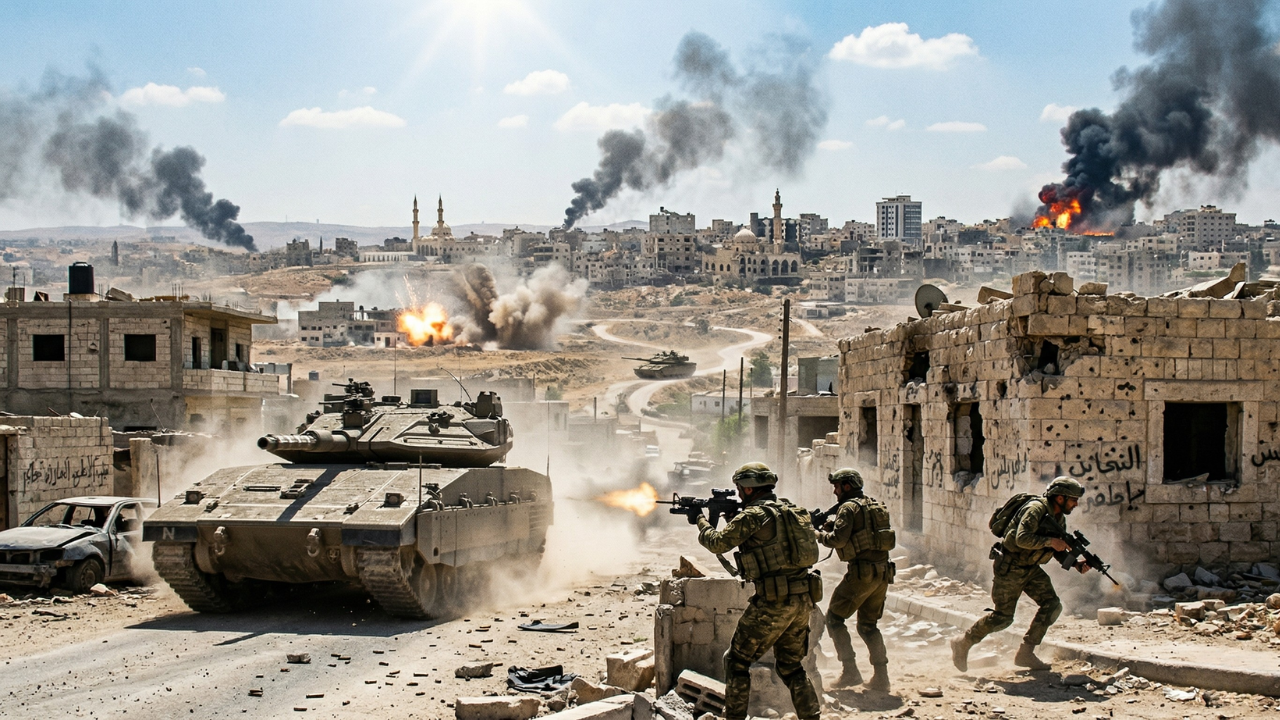
The Middle East conflict has dramatically escalated, morphing from a focused confrontation between Iran, Israel, and the United States into a sprawling regional war with multiple active fronts. The intricate web of alliances and rivalries has drawn in nations like Yemen, Lebanon, Syria, and Iraq, alongside the Persian Gulf states, creating a conflict far more complex and challenging to contain than previously imagined. This expansion signifies a critical turning point, transforming the geopolitical landscape and raising the stakes for global stability.
Yemen’s Houthis Enter the Fray
A significant indicator of this widening conflict was the open involvement of Yemen’s Houthi movement. The group launched a series of attacks targeting Israeli military installations, deploying ballistic missiles, cruise missiles, and drones. This bold move marks a substantial escalation, introducing yet another active theatre to a conflict already stretching across the region. The Houthis’ direct engagement underscores the interconnectedness of regional security dynamics and the potential for non-state actors to significantly influence the course of major geopolitical events.

Lebanon: A Persistent and Devastating Front
Lebanon continues to bear the brunt of the ongoing hostilities, remaining one of the most active and devastating fronts. Israeli military operations persist within Lebanese territory, met with reciprocal actions from Hezbollah. The humanitarian cost of this sustained conflict is mounting, impacting civilians, essential medical services, and critical infrastructure. This makes Lebanon far more than a secondary theatre; it serves as a stark illustration of the war’s profound impact on civilian populations and their daily lives. The ongoing activity on this front directly links the broader conflict to Hezbollah, a crucial regional ally of Iran. As long as this front remains volatile, any attempt to portray the conflict as geographically contained becomes increasingly untenable.
The Persian Gulf: No Longer a Background Player
The conflict’s reach has extended visibly into the Persian Gulf. Gulf Cooperation Council (GCC) states have reported facing missile and drone threats, a direct consequence of the escalating regional tensions. Financial markets within the Gulf remain acutely sensitive to the pervasive fear of a wider conflict, highlighting the interconnectedness of security and economic stability. The war’s impact on the Gulf extends beyond military concerns, directly affecting crucial oil exports, investor confidence, and vital international shipping routes. This broader scope is a key reason why the current phase of the conflict feels significantly more expansive than its initial stages. It is no longer solely about direct confrontations between Iran and Israel; it is now also about the capacity of regional states to insulate themselves from being further drawn into a war that threatens their airspace, ports, and critical infrastructure.
Syria and Iraq: Vulnerable to Spillover Effects
Syria and Iraq remain highly susceptible to the conflict’s spillover effects, primarily due to the presence of Iran-aligned militias and ongoing cross-border pressures. Armed groups with ties to Iran maintain a significant presence across Iraq, while Syria continues to experience threats linked to the wider regional escalation. While these fronts may not always capture the headlines, they are integral to the conflict’s complex and often elusive nature, making it difficult to neatly define its boundaries.
When a war unfolds across multiple nations in this manner, each localised incident carries the inherent risk of igniting a larger cycle of escalation. This dynamic significantly complicates diplomatic efforts, even as dialogue and negotiations continue. The intricate web of alliances and proxy relationships means that actions in one country can have immediate and far-reaching consequences in others.
A Truly Regional Conflict
The most accurate way to comprehend the current state of the Middle East war is not as a singular campaign, but as a multifaceted regional conflict with interconnected fronts. Iran, Israel, and the United States remain central to the equation. However, the Houthis of Yemen, Hezbollah in Lebanon, the states of the Persian Gulf, and the war-torn nations of Iraq and Syria now all play pivotal roles in shaping the war’s trajectory in ways that are increasingly difficult to disentangle.
The term “multi-front conflict” has transcended mere analytical description; it is now the most precise and concise summation of the war as it stands today. The strategic implications of this regionalisation are profound, demanding a comprehensive and nuanced approach from international actors seeking to de-escalate tensions and prevent further catastrophe. The interconnectedness of these fronts means that any lasting resolution will require addressing the underlying grievances and security concerns of all involved parties, a monumental task given the current levels of mistrust and animosity. The human cost of this expanding war continues to rise, with civilian populations bearing the heaviest burden.