Scotland’s World Cup Preparations Begin with a Stumble Against Japan
Scotland’s journey towards the World Cup finals has commenced with a disappointing 1-0 defeat against Japan at Hampden Park, a stark contrast to the jubilant scenes that followed their previous victory over Denmark. While the national team has a history of faltering in friendly fixtures, this particular performance raised concerns, leaving fans and analysts questioning the team’s readiness for the global stage.
The atmosphere at Hampden was notably subdued, mirroring the uninspired play on the pitch. In what was the first of four crucial warm-up matches, Scotland struggled to assert dominance, ultimately succumbing to a late winner from Junya Ito. The match offered a sobering reminder that the euphoria of qualifying for the World Cup might have papered over some underlying issues.

A Dominant Japanese Display
From the outset, Japan demonstrated superior composure and tactical discipline. They controlled possession for the majority of the match, enjoying nearly 55 per cent of the ball and unleashing 18 shots on goal compared to Scotland’s seven. Their passing was sharper, their movement more incisive, and they consistently posed a threat to the Scottish defence.
The Japanese were unfortunate not to have taken the lead much earlier. Kodai Sano struck the crossbar in the 38th minute after testing goalkeeper Angus Gunn, who, despite some earlier saves, was ultimately culpable for the decisive goal.
The introduction of Brighton’s Kaoru Mitoma at halftime injected further impetus into the Japanese attack. Mitoma, a dynamic winger, immediately made his presence felt, bending a shot just wide of the post and later forcing a crucial save from Gunn at close range. Scotland’s defence was repeatedly stretched and sliced open, highlighting a vulnerability that will need addressing.
The winning goal arrived in the 83rd minute. Mitoma initiated the move with a forward pass, leading to Kento Shiogai laying off a low cross from Junnosuke Suzuki into the path of Ito. Ito skillfully evaded Kieran Tierney before firing a shot that deflected off the grounded Gunn and trickled over the line.
Tactical Decisions and Player Performances Under Scrutiny
Manager Steve Clarke had alluded to using these friendlies to experiment with his squad and give fringe players an opportunity to impress. However, the starting lineup against Japan was not as radical as some had anticipated. Kenny McLean, a seasoned campaigner, was included in midfield. While his presence is familiar, it raises questions about what new insights can be gained from his inclusion, especially considering his likely role as a substitute in more significant matches.
Nathan Patterson was handed his first start in two years at right-back, filling in for the absent Aaron Hickey. While his return was welcome, Patterson appeared rusty, lacking the attacking verve and confidence that characterised his earlier career. He seemed to be in need of game time to regain his sharpness.
Lyndon Dykes led the line as the centre-forward. Similar to McLean, his selection offered little in the way of new revelations. Dykes is a useful option for direct play and aerial battles, but he had limited impact on the ball before being substituted for George Hirst in the 63rd minute. Many felt Hirst, with his greater mobility and technical ability, would have been a more intriguing choice to start. Hirst himself showed flashes of promise, particularly with a sharp turn and shot that narrowly missed the post late in the game.
One player who was given an extended opportunity to stake his claim was Tommy Conway. Reintegrated into the squad, Conway played the full 90 minutes on the left flank, a position he has adapted to at Middlesbrough this season. Despite being deployed in a wide role, he struggled to make a significant impact, largely due to the team’s disjointed attacking play and his limited supply of the ball. It remains to be seen if his performance was sufficient to earn him a place on the plane to North America.

Glimmers of Hope Amidst the Disappointment
Despite the overall lack of cohesion, there were a few individual performances that offered encouragement. Captain Andy Robertson showed moments of quality down the left flank, demonstrating his usual drive and commitment.
Scott McTominay, as has often been the case, was Scotland’s most influential player and the primary beacon of hope. He was agonizingly close to opening the scoring in the eighth minute, his powerful header from a John McGinn cross being instinctively tipped onto the post by Japanese goalkeeper Zion Suzuki. McTominay also saw a header saved and fired a free-kick just over the bar during Scotland’s brief resurgence at the start of the second half. His performance, however, could not single-handedly stem the tide. He was substituted with 19 minutes remaining, with a potential hamstring concern, though it is hoped this was a precautionary measure.
Unanswered Questions and a Striking New Kit
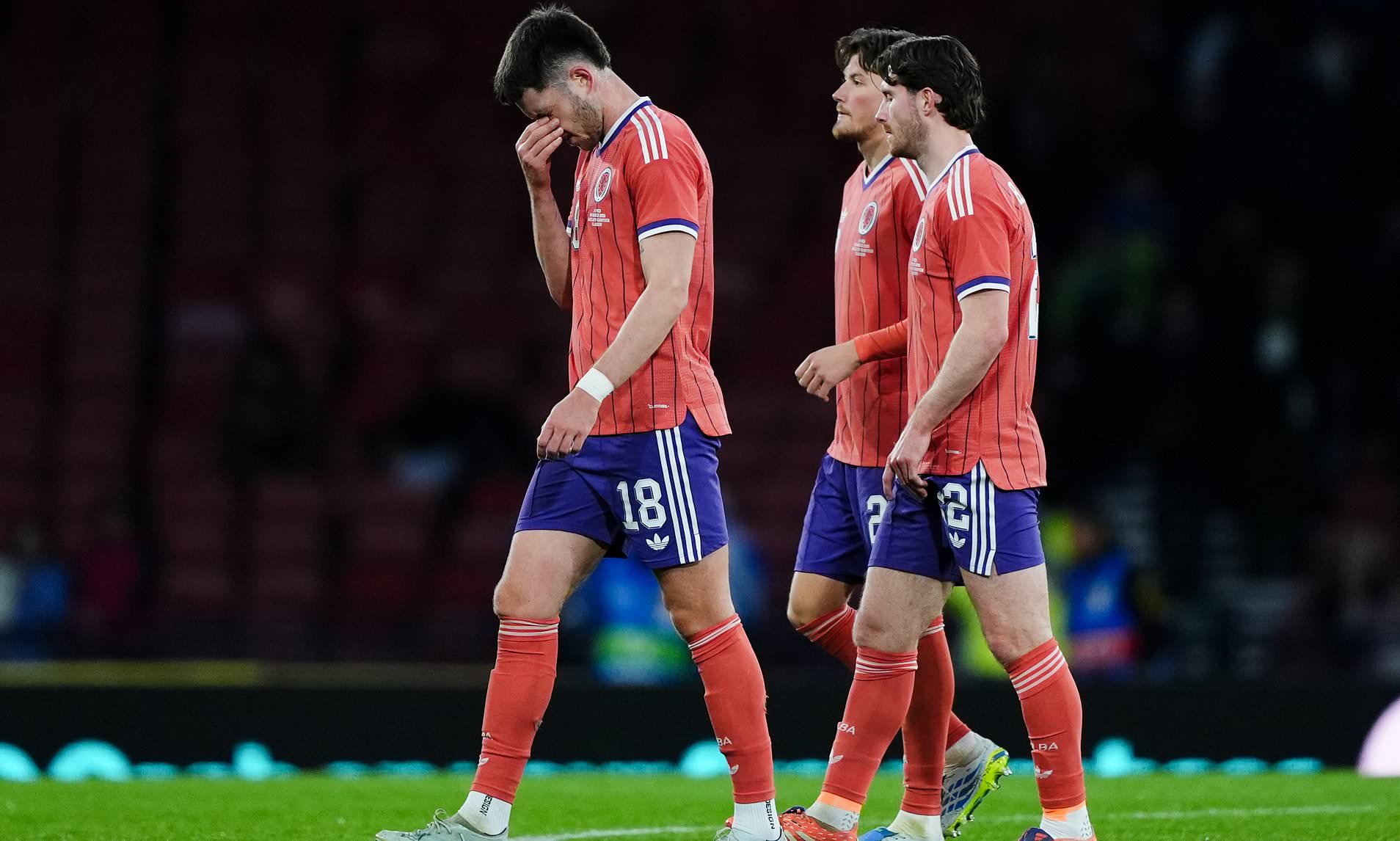
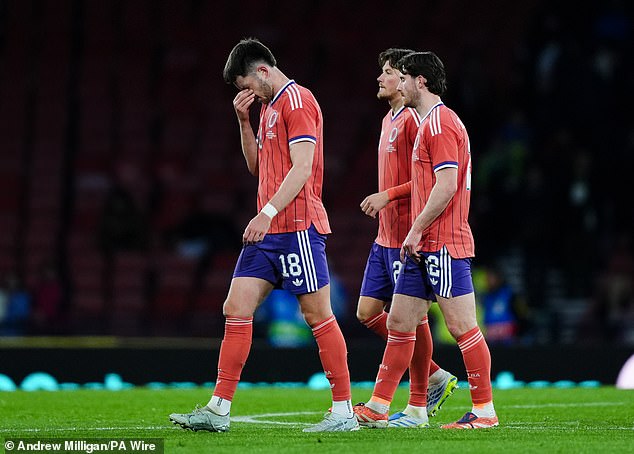
This underwhelming display has solved few puzzles regarding Scotland’s tactical approach and individual roles. However, it has definitively answered one question: the team’s new away kit, designed for the World Cup, is undeniably salmon pink, a departure from the scarlet red advertised by the SFA. While the kit itself looks striking, the performance of the players wearing it on the night unfortunately did not match its visual appeal.
The upcoming fixture against Ivory Coast at Everton’s Hill Dickinson Stadium presents another opportunity for Scotland to refine their strategies and build momentum. The Tartan Army will be hoping for a significantly improved performance as they continue their preparations for the ultimate footballing challenge.