McLaren’s Return to Le Mans: A New Era with the MCL-HY and MCL-HY GTR
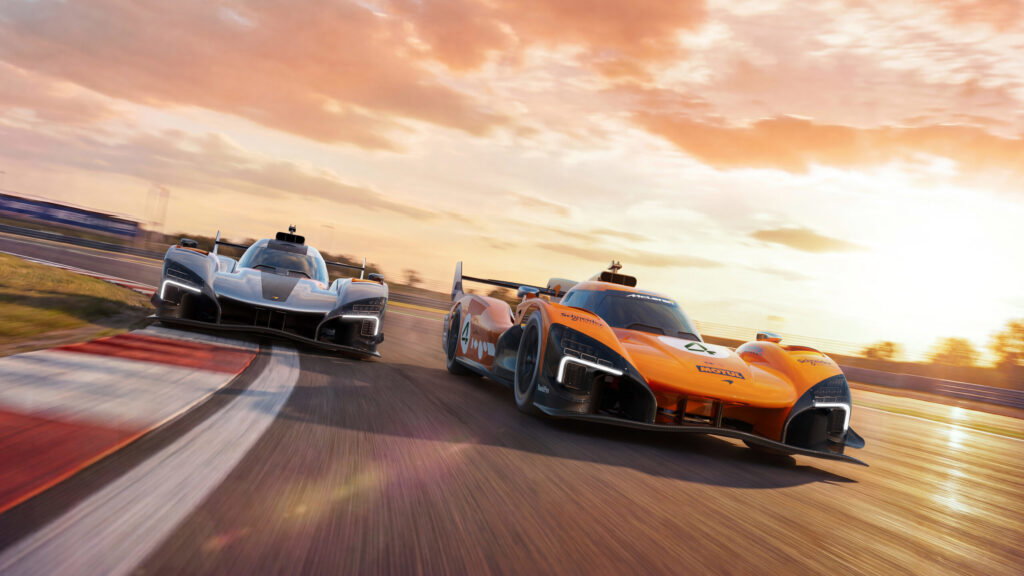
Nearly a year ago, McLaren unveiled its ambitious plans for a return to the prestigious 24 Hours of Le Mans in 2027. The British automotive giant shared teasers of a race-spec hypercar that would also have a track-specific version exclusively for VIP customers. This hypercar is the MCL-HY, while its track-focused sibling is known as the MCL-HY GTR.
Both models are powered by a 2.9-litre twin-turbo V6 engine, with power directed to the rear axle. However, the race-spec version features a hybrid power unit to meet LMDh regulations, delivering a combined output of 697bhp. In contrast, the MCL-HY GTR, which is designed for track use, produces an impressive 720bhp!

While it might seem surprising that the GTR is more powerful than its race-spec counterpart, the performance curve may not be straightforward. Without the hybrid system, the GTR’s dry weight has not been officially disclosed, but it is likely to be lower than the minimum kerb weight of 1030kg for the race car.
A Unique Ownership Experience
McLaren is also preparing a special experience for its VIP customers through what it calls “Project: Endurance.” This initiative allows select owners of the MCL-HY GTR to become integral members of the team’s LMDh journey. These customers will have the opportunity to participate in the development and testing of the car, eventually seeing it compete on the track.
Moreover, participants will be part of a six-event track driving programme over two years. They will get to drive their MCL-HY GTR on international circuits, supported by professional driver coaching and a dedicated pit crew. Deliveries of the MCL-HY GTR are set to begin from 2027 onwards.
McLaren’s Legacy in Endurance Racing
McLaren’s most iconic moment in Le Mans history occurred in 1995 when the F1 GTR won on its debut. Driven by Yannick Dalmas, Masanori Sekiya, and JJ Lehto, the winning car was reportedly taken back by McLaren and never raced again.
What made this victory remarkable was that Le Mans racing wasn’t a top priority for McLaren at the time. During testing, the car’s suspension had to be repaired after an intense session. It also faced significant issues with the gearbox, which resurfaced during the main race.
To make matters worse, rain hit the track during the race. Despite these challenges, the F1 GTR demonstrated such speed that no rivals could keep up. It is even said that the winning F1 GTRs were run on the reserve fuel pump due to an issue with the main unit.