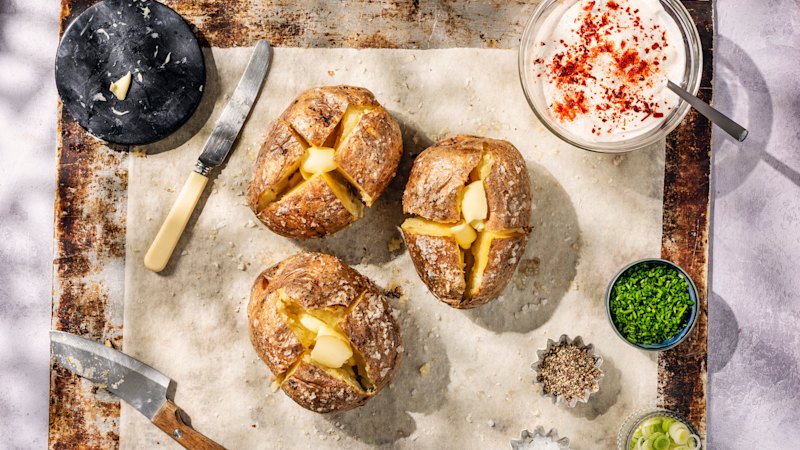
In November 2025, Kim Kardashian found herself puzzled when asked about her preference for “jacket potatahs” by British personality Grime Gran. Her bewildered response of “what is that?” sparked a wave of memes and social media posts celebrating the dish. But why has this once-marginalised food become a topic of such passionate discussion?


Changing attitudes
According to accredited practising dietitian and cookbook author Prue Mynard, potatoes have undergone a significant shift in perception over the years. “Potatoes were shunned because there was a phase where people feared carbs,” she explains. “Everyone focused on protein and fat. However, with the growing awareness of gut health and insulin sensitivity, they’ve made a comeback.”
Mynard highlights that potatoes are a rich source of fibre, especially when consumed with their skin. “A jacket potato contains around 50 per cent of its fibre just under or within the skin,” she notes. “Cooking and cooling them alters the starch structure, increasing the amount of resistant starch, which acts as food for the beneficial bacteria in the gut.”
She also mentions that cooled potatoes become a lower GI food, reducing spikes in blood sugar levels. “You can pre-cook them in the microwave, let them cool, and then crisp them up in the oven for a great result.”
Skin-deep cook-ups
As dietary trends evolve, jacket potatoes are regaining their place on the menu. Kerri Farrell of Victorian potato specialists, the Spud Sisters, says they often receive queries about baked potatoes at farmers’ markets. Together with her sister, Catherine Ramage, the pair are third-generation potato producers.
One of the most common questions they get is how to achieve a crispy and chewy skin with a fluffy interior. “It depends on the variety,” says Farrell. “Double-skin varieties like Blue Moon or Royal Blue are ideal. You might find them in supermarkets.”
She also recommends Red Rascal, Desiree, or red potatoes with thicker skins. “When we have Otway Reds, they sell out quickly for whole baked potatoes.”

But Farrell assures that any baked potato is better than none. She suggests wrapping thinner-skinned varieties in foil to protect them. Otherwise, simply dry the skin thoroughly, rub with olive oil, and roast whole at 200-220C (about 70 minutes for a 400g potato) for an excellent result.
While the Spud Sisters note a rising interest from health-conscious younger generations, owner of Spudies food truck in Sydney’s Cabramatta, Hadi Chahine, sees nostalgia driving the trend. “Many people in their 40s and 50s are thrilled to find us and say they wish there were more jacket potatoes like they remember. They see my food truck and their eyes light up.”
Jacket potatoes are a perfect comfort in times of financial strain. Chahine uses the foil technique, opting for high-starch White Russet spuds. “Each potato is wrapped in foil and pricked a few times with a fork to allow steam to escape during baking,” he explains. “They’re rubbed lightly with oil and coated with coarse salt to create their signature crunchy ‘jacket.’”

“Once cooked, cutting a cross on the top and gently squeezing the sides opens the potato and loosens the interior, so it can be fluffed with butter, salt and pepper to enhance the creamy texture,” says Chahine. “This process produces a jacket potato with a crispy, seasoned outer skin and a light, fluffy inside that perfectly absorbs toppings.” Spudies’ toppings include beans and cheese, butter chicken or brisket.
If you’re short on time, Farrell – like Mynard – suggests starting your potato off in the microwave, but her biggest tip is for the oven. “If you’ve got a really big potato, put a metal skewer all the way through, and that conducts heat right into the middle.”
Cost-of-living comfort
While fashions and dietary information shift, one thing remains constant: “Potatoes are always fairly stable in price,” says Farrell, making them a perfect comfort in cash-strapped times. “They last really well, so they’re very economical, if you store them properly,” which means a cool, dark and dry space, that’s not the fridge.
As the hobbit Samwise Gamgee proclaimed in the 2002 movie adaptation of The Lord of the Rings: The Two Towers: “What we need is a few good taters.”
Jane’s jacket potatoes with cheesy fire corn topping
INGREDIENTS
For the perfect jacket potatoes
4 medium-large, thick-skinned potatoes (or 8 small potatoes)
olive oil
salt and pepper
50g butter
Cheesy fire corn topping
50g butter
2 spring onions, finely sliced, green and white parts separated
2 x 400g tins corn kernels, drained
1 tsp smoked paprika
½ tsp chilli flakes
¼ cup whole egg mayonnaise
1 tbsp barbecue sauce
1 cup grated cheese (a pizza-style blend works well)
4 radishes, finely sliced (optional)
METHOD
Pre-heat your oven to 220C fan-forced, and wash and thoroughly dry your potatoes to help the skin crisp up. Rub each potato lightly with olive oil, place on a baking tray and bake until cooked through. A 400g medium potato will take about 70 minutes, while smaller ones will take slightly less time. Turn the potatoes after about 40 minutes to avoid sticking, and sprinkle with a little salt.
Once the potatoes are cooked, allow them to cool enough to handle, then cut a cross on the top and pinch the potato together to open it up. Fluff up the interior with a fork and add a small knob of butter and some salt and pepper to each, and allow it to rest while you prepare the filling.
Meanwhile, for the cheesy fire corn topping, heat a frypan over medium heat, add the butter and white part of the spring onions, and cook until just softening. Toss in the corn, spices, mayonnaise and barbecue sauce and stir to combine. Add half the grated cheese and stir through until melted.
Divide the cheesy fire corn topping between the opened potatoes. Scatter with the remaining cheese and place under the grill for a few minutes to melt the topping.
Serve scattered with the reserved spring onion and slices of fresh radish, if using.
Serves 4
Note: If you are using thinner-skinned potatoes, rub them with oil and wrap them in baking paper and foil before baking, this will protect the skins and stop them drying out.